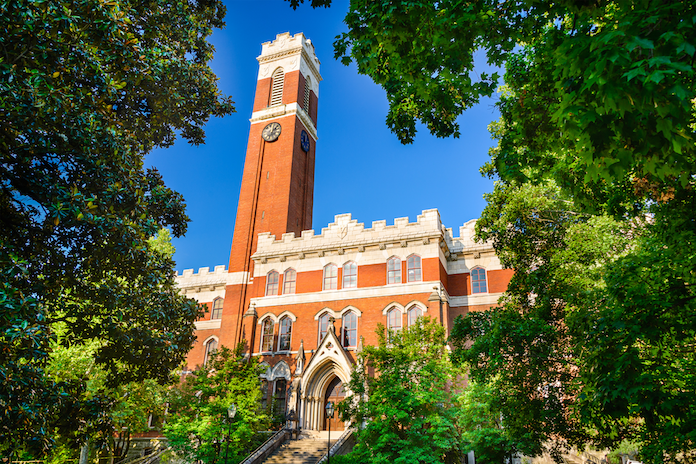
If you’ve spent any time on college admissions social media lately, you may have seen the headline: Vanderbilt is opening a campus in New York City. There are photos of a beautiful Chelsea building, references to the High Line, and a lot of excitement about Vanderbilt’s expansion beyond Nashville.
Here is the distinction that matters if you’re applying to college this year: there is no such thing as applying to “Vanderbilt NYC.” You apply to Vanderbilt University through the same competitive process as every other applicant. The New York campus only enters the picture after you’re already enrolled.
The Headline vs. the Fine Print
Vanderbilt’s New York campus is a significant institutional milestone. The university received unanimous approval from the New York Board of Regents in November 2025, officially establishing its first campus outside Nashville in its 150-year history. Located in Manhattan’s Chelsea neighborhood in a historic building that formerly housed the General Theological Seminary, the campus spans roughly 2.7 acres and 13 buildings, and opens to its first students in Fall 2026.
Two academic programs will run there: an Undergraduate Semester Program, which lets students spend a semester taking courses while completing an internship or research placement in the city, and a new Master of Science in Business and Technology through the Owen Graduate School of Management and the School of Engineering.
What isn’t in there: a separate undergraduate admissions process, a lower bar for first-year applicants, or any path into Vanderbilt that bypasses Nashville.
Who is Vanderbilt-NYC for?
Eligibility for a semester at Vanderbilt University–New York City requires that a student already be a matriculated Vanderbilt undergraduate, typically a junior or senior in good academic standing. Transfer students need at least two semesters on the Nashville campus first. There is no way to apply as an incoming first-year or transfer student and land at the Chelsea campus instead.
In other words: get into Vanderbilt, build your foundation in Nashville, then apply internally for a semester in New York once you’re eligible. It’s an experience you grow into as a Vanderbilt student, not a separate front door into the university.
So Why Does This Matter for Applicants Right Now?
Even though it doesn’t change how you apply, the NYC campus is genuinely useful to know about if Vanderbilt is on your list, particularly when you sit down to write Vanderbilt’s short-answer prompt. Vanderbilt doesn’t ask a standalone “Why Vanderbilt” essay; instead, applicants respond to a prompt built around the university’s motto, Dare to Grow, reflecting on how their background or identity has shaped their growth and how they plan to contribute to the Vanderbilt community.
College Essay Guidance
Experience personalized, expert guidance to elevate your college essays and secure your spot at top universities.
That distinction matters, because it means the prompt is really asking two things at once: who you are, and what you’ll do once you’re there. Admissions officers read hundreds of responses that gesture at Nashville’s music scene or Vanderbilt’s academic reputation in vague, interchangeable terms. A specific, well-researched mention of the New York semester program, tied to a real interest of yours, does something different. A student interested in finance, media, or tech now has a concrete way to answer the “contribute” half of the prompt: a semester living and working in one of the country’s most competitive job markets, without leaving the university that admitted them.
Used well, that’s the kind of detail that makes a response sound researched rather than templated. Used without intent, it’s just another fact dropped into a paragraph. The difference is whether you connect it to something specific about your own goals and how you’d actually grow into that opportunity.
The Bigger Picture: Vanderbilt Is Betting on Growth
Vanderbilt’s NYC campus is part of a broader expansion that includes a proposed campus in West Palm Beach, a new College of Connected Computing, and record application numbers year over year. Vanderbilt is growing its reach and resources at the same time its undergraduate admissions have become dramatically more selective.
That combination runs counter to the assumption some families make when they hear a school is “expanding.” A second campus does not mean more first-year seats. This year, Vanderbilt admitted just 2.8 percent of regular decision applicants, a record low, out of the largest applicant pool in the university’s history. Growth here means deepening what Vanderbilt offers current students, not widening the door to get in.
What About Verto Education?
Alongside the New York announcement, Vanderbilt introduced a new partnership with Verto Education, allowing a select group of applicants to spend a first year abroad with guaranteed transfer admission to Vanderbilt as sophomores. It’s a distinct program, but a different piece of the Vanderbilt admissions story: the university is building towards the future, and including more structured pathways into and through Vanderbilt as demand outpaces capacity.
Top Tier’s Head of Student & Family Programming, Sam Joustra, a former assistant director of admissions at Vanderbilt, connected the dots in a recent Forbes piece on how first-year-abroad partnerships are reshaping admissions. As she put it, these moves reflect Vanderbilt’s broader strategy of building satellite campuses and study-abroad partnerships in parallel: “alternative pathways are gaining interest and momentum.” Dr. Liz Doe Stone acknowledges an important nuance in that same piece: these programs aren’t quite rejections and aren’t quite acceptances. They’re colleges finding a third option, one that lets them say yes to more qualified students without expanding the incoming class. It’s a useful lens for both Verto and the New York campus: two tools serving the same goal of managing demand without lowering the bar to get in.
What This Doesn’t Change
None of this makes Vanderbilt easier to get into. The academic bar, the depth expected in supplemental essays, and the overall selectivity of the process are unaffected by the New York campus or the Verto partnership. For the full picture on where Vanderbilt’s acceptance rates stand this cycle, take a look at our Vanderbilt Class of 2030 acceptance rates blog post.
Knowing these key distinctions exist is important, but applying them to your own individualized admissions strategy is another. Our team of experts is ready to help you start that journey today.
Vanderbilt is getting more selective, not less, and the students who stand out are the ones who can speak specifically to what the university actually offers and why it’s the right fit for them. Connect with our team today, and start building your individualized admissions strategy.
Stay Connected for More Expert Guidance
Want to stay in the loop? Follow us on Instagram @toptieradmissions and subscribe to our blog for expert advice and admissions insights.
Know someone else navigating the college process? Pass it along—they’ll thank you later!
- Johns Hopkins Supplemental Essay 2026-2027 - October 9, 2026
- Get to Know College Admissions Expert, Kayte Hager - October 1, 2026
- U.S. News College Rankings 2027: MIT Is No. 1, Princeton Drops - September 22, 2026