
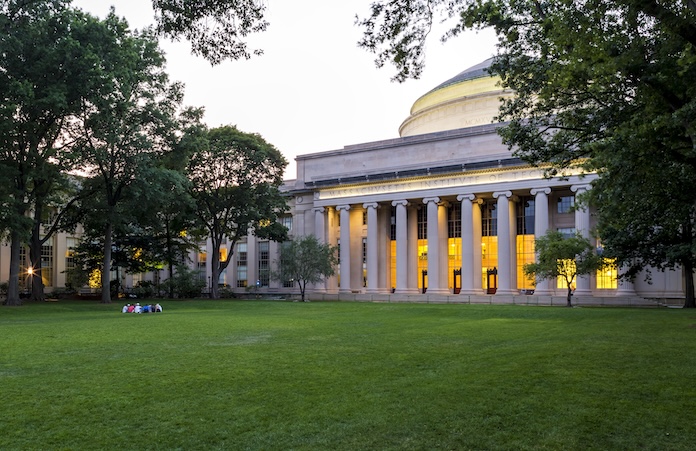
Undergraduate applicants to the Massachusetts Institute of Technology (MIT) form a self-selecting group, driven by the Institute’s mission to use science and technology “to make the world a better place.” Because MIT requires extensive core coursework in advanced math and science, the Institute naturally attracts a specific type of scholar. Students without an interest in these rigorous STEM foundations may find that the Institute is not the right fit. Ultimately, every undergraduate must share MIT’s commitment to hands-on learning, innovation, creativity, and collaboration.
Indeed, it is this match between applicant and MIT that drives the admissions process. Top academic preparedness and standardized test scores matter, but students must also demonstrate that MIT is where they belong. To that end, students applying to MIT cannot use the Common Application. MIT maintains its own application designed to evaluate candidates in terms of its own, distinct criteria. Students must apply through the MIT portal.
MIT Supplemental Essay Prompts
MIT does not ask applicants to submit one main essay; instead, the MIT application consists of 4 short answer essay questions, 4 short response questions, and one extra, optional “additional information” text box that provides applicants a place to “tell us anything else you think we really ought to know.”
MIT gives applicants advice you should listen to: “Remember that this is not a writing test…You should certainly be thoughtful about your essays, but if you’re thinking too much—spending a lot of time stressing or strategizing about what makes you ‘look best,’ as opposed to the answers that are honest and easy—you’re doing it wrong.”
With that guidance in mind, here are tips to help you get it right.
Note: Essay prompt wording is cited directly from the official MIT College Undergraduate Admissions Application
Short Answer Essay Questions (approximately 100–200 words each)
These questions are MIT’s way of getting insight into who you are by way of specific examples. These are not long, but they are long enough to get a sense of how you express yourself in writing. In drafting these, it is okay to write more than the word limit and then remove extraneous words and details in the editing process. Often you have to ‘write yourself in” to a response before you get to what you really want to say. Students often find that the true beginning of their essay is somewhere in the middle and then chop their answer in half during the editing process.
Prompt 1: What field of study appeals to you the most right now? (Note: Applicants select from a drop-down list.) Reflect on what has led you to this interest.
- What this prompt is really asking: MIT declares in their Values Statement, they welcome “nerdiness.” They also really want you to prove that your academic interest is genuine.
- What great looks like: Great answers are specific. Provide evidence that shows how you have developed your interest over time and suggest where that curiosity might go next.
- A concrete move: Open with a small, vivid detail from the moment your interest sharpened.
- Try: “The first time I disassembled the family’s toaster…”
- Pitfall: Don’t be vague or overly general. MIT’s drop-down forces a single field for a reason.
Prompt 2: While some reach their goals following well-trodden paths, others blaze their own trails achieving the unexpected. In what ways have you done something different than what was expected in your educational journey?
- What this prompt is really asking: MIT champions risk-taking, independence, and creative experimentation. This question is trying to understand your appetite for pursuing the unknown. Note that the prompt mentions your “educational journey” so your response should be about an unconventional academic decision.
- What great looks like: Offer a clear, specific description paired with honest reflection; say what the choice reveals about you.
- A concrete move: Start with an image. Even a short answer needs a hook.
- Try: Ground your answer in one decision with real stakes: e.g., an original research paper topic, a bold hypothesis, an independent study.
- Pitfall: Don’t spend your entire word limit describing the decision. Leave space for reflection.
Prompt 3: How have your personal and academic experiences influenced the types of problems you would want to tackle with an MIT education and the impact you aim to make on your community?
- What this prompt is really asking: This is MIT’s “why us” question. They want to see evidence that you understand MIT’s hands-on, service-oriented culture well enough to say what you’d actually do there.
- What great looks like: Specificity is what separates great answers from generic ones. Note that ‘community’ is part of the question, and be sure that ‘impact’ is part of your response.
- A concrete move: Name a specific MIT resource, course, lab, professor’s research area, or student group by name, and connect it directly to your experience and the problem you want to address. Research MIT before you start answering this question.
- Try: MIT’s [specific program/lab/course] would let me test [specific idea] in a way that would provide the tools necessary to make an impact on [specific problem you want to address or solve].
- Pitfall: Avoid listing MIT itself as the reason. Prestige-based reasoning tells them nothing about you.
Prompt 4: How did you manage a situation or challenge that you didn’t expect? What did you learn from it?
- What this prompt is really asking: MIT is testing for resilience: how you will manage the repeated failures necessary to bold exploration and problem-solving.
- What great looks like: Describe a challenge you confronted honestly. Include the moment things didn’t go as planned, the specific action you took, and a reflection that shows genuine change in how you think or act now.
- A concrete move: Be sure to describe the decision-making process itself (what you tried, what failed, what you adjusted) so that MIT can understand how you work your way through problems.
- Try: Try showing your growth by describing what you would do differently next, not just what you learned.
- Pitfall: Don’t fabricate or inflate a challenge or falsely claim that you didn’t expect it. Even a small moment can reveal a lot about your resolve.
Short Response Questions (40 to 50 words each)
These questions are designed to get a very quick snapshot of who you are outside of the classroom. MIT seeks students who will contribute to the culture of the Institute, embrace its values and will use your responses to assess your curiosity and intellectualism. MIT cautions about overthinking these responses, but every word should be essential to your answer since you are allowed so few of them.
Short Response 1: What do you do just for fun?
- What this prompt is really asking: This is a check for balance, since MIT’s academic program is demanding, and they want students who know how to recharge and achieve balance.
- What great looks like: A specific, low-stakes activity that could only have been written by you, not something chosen because it sounds impressive. Be quirky. Be yourself.
Short Response 2: Who is someone you admire, whether you know them personally or look up to them from afar? Tell us why.
- What this prompt is really asking: Whom you admire, and specifically why, tells MIT what qualities you value most.
- What great looks like: The person you choose does not have to be famous or living. Give one precise, personal reason for the admiration that you can connect to your own values, ambitions, or experiences.
Short Response 3: What’s a topic, academic or non-academic, that you could talk about for hours?
- What this prompt is really asking: MIT is looking for authentic intellectual or personal enthusiasm. Your answer does not need to connect to your intended major. This is a place to show another side of yourself.
- What great looks like: Use imagery. Use examples to show your enthusiasm.
Short Response 4: MIT values both “generalists” with varied interests and “specialists” who focus deeply on one or a few passions. Which do you think best describes you, and why?
- What this prompt is really asking: MIT wants to see if you can honestly characterize your own intellectual style and back it up with evidence.
- What great looks like: You are seeing a theme with these responses: show, don’t tell. Support your response with one or two concrete, specific examples.
FAQs
How many supplemental essays does MIT require? MIT requires 4 short answer essays (roughly 100–200 words each) and four short response questions (40–50 words each). There is also one optional “additional information” text box for anything else you think MIT should know.
What is the hardest MIT supplemental essay? Most applicants find Prompt 3 the hardest, because it demands specific, credible knowledge of MIT’s programs and resources, evidence of what intellectual path you have already chosen, and why MIT is the place for you. Accomplishing all this in a tightly-worded answer is hard!
What can MIT really learn about me from such short questions? Quite a lot. MIT is looking at your answers holistically to get a full picture of your character and curiosity to assess whether or not you and MIT are a good match.
Should I put something in the “additional-information” text box even though it is optional? This is a place for students to add information about an extenuating circumstance that may have disrupted their academic trajectory, performance, or attendance. It should not be used as a bonus essay to restate your strengths. That said, this is a good place to elaborate on a specific activity with particular relevance to your application that could not be adequately described elsewhere. Maybe you founded a non-profit that has made a measurable impact, conducted research that resulted in a publication, or perhaps studied overseas for a semester. This is a text-box answer, so you will need to be brief.
When should I start the MIT essays? Start early. Because the format is nine short, distinct pieces rather than one long essay, the process benefits from spacing: draft your responses, let them sit, and revise them. You will be amazed at how fresh eyes can help you edit and reframe your ideas.
Stay Connected for More Expert Guidance
Want to stay in the loop? Follow us on Instagram @toptieradmissions and subscribe to our blog for expert advice and admissions insights.
Know someone else navigating the college admissions process? Pass it along, they’ll thank you later!