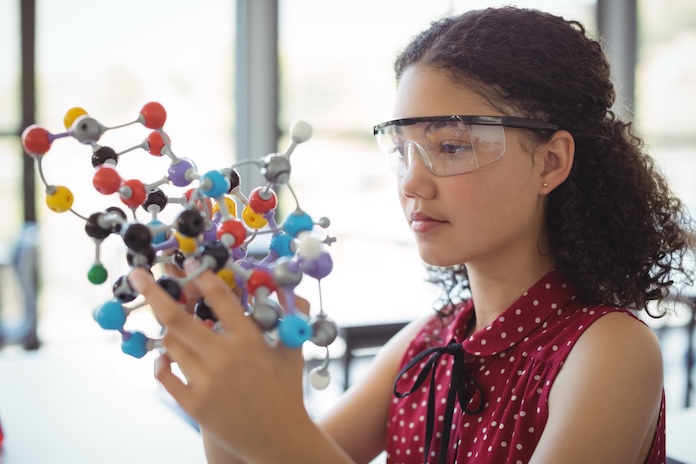
For students driven by curiosity, problem-solving, and the desire to shape the future, STEM offers a direct path toward meaningful impact. Yet, with hundreds of universities claiming excellence in science, engineering, and technology, it can be difficult to know where truly exceptional programs and opportunities for hands-on research actually exist.
What defines a strong STEM program? Which U.S. universities are known for excellence in science, math and engineering, and what research programs should you/could you target as a high schooler?
WHAT MAKES A STRONG STEM PROGRAM?
When evaluating STEM programs, consider the following factors:
1. Undergraduate Research Access
Top STEM institutions integrate undergraduates into labs early. Look for:
- Funded research programs like:
- Formal undergraduate research offices and resources, like:
- Harvard’s SEAS Society of Women Engineers
- Yale’s WISAY (Women and Gender Minorities in Science at Yale)
- Why? Because they advocate for gender equality in science, technology, engineering and mathematics (STEM). They note they are welcoming not only to women and gender minorities at Yale, but to everyone who is interested in promoting gender equality in science and research.
- Opportunities to publish or present work:
- Professors known for mentoring undergraduates
- Science Direct published an article on this exact topic in 2024 called “A Review of Undergraduate Research Programs Aimed at Underrepresented Students” and highlighted Emory, Penn State and GW
College Private Counseling
Unlock your full potential.
2. Cutting-Edge Facilities and Interdisciplinary Centers for Research
Modern research questions rarely fit neatly into a single field. Leading schools support:
- Robotics and AI centers
- Bioengineering and synthetic biology institutes
- Materials science and nanotechnology labs (Cheers to you, Caltech!)
- High-performance computing hubs
3. Strong Industry Pipelines
Partnerships with tech, biotech, and engineering companies or think-tanks. Look for:
- Co-ops and internships (note the Pathways to Science REU program list here)
- Sponsored senior capstone projects, not just a senior thesis option
- Fast-track hiring pipelines on campus (For example, the University of Rochester has a Spring Career Expo to promote on-campus entry level hiring and company connections)
4. Prestigious Faculty and Plentiful Research Funding
Major grants—NSF, NIH, DOE—signal robust research ecosystems and innovation.
- For example, NSF funded UVA with $4M in October 2025 for quantum computing and UVermont with $5M for AI supercomputers and an underground computer in July 2025! UVermont announced their new supercomputer’s name this December and it’s truly great —IceCore!
5. Groundbreaking STEM Programs to Consider:
- MIT: MIT’s ecosystem blends rigorous academics with a maker culture few institutions can replicate. Undergraduate participation in research through the UROP program is unparalleled, and interdisciplinary centers—from CSAIL (AI/robotics) to the Koch Institute (cancer research)—offer engaging opportunities for students.
- Caltech: Smallish but mighty, Caltech offers an intimate research environment where undergraduates often work directly with world-class faculty. For students who thrive in rigorous, math-heavy, research-first settings, Caltech remains unmatched.
- Stanford University: With Silicon Valley in their backyard, Stanford excels in computer science, bioengineering, AI, and now digital humanities too. I have a student there now studying the intersection of modern jazz and physics!
- Georgia Tech: A powerhouse in engineering, Georgia Tech offers extensive co-op programs and research opportunities in aerospace, materials science, biomedical engineering, and sustainable systems. Students benefit from a strong pipeline into industry and government labs. There is a reason they were recently ranked #1 for job/career placement by Princeton Review.
- Carnegie Mellon University: World-renowned for computer science, robotics, and AI, CMU boasts some of the top labs in machine learning and human-computer interaction. I also love CMU’s PreCollege Program for high schoolers —the summer 2026 application is now open!
Research Immersion Program
Personalized Research. Powerful Results.
UNIQUE AND COMPETITIVE STEM SUMMER RESEARCH PROGRAMS
For students seeking hands-on experience to boost their Common Application as they plan for college, here are a few selective programs that offer real research immersion and bolster competitive college applications:
Students conduct research in fields such as immunology, cancer biology, genetics, and bioengineering. The program is excellent for students interested in biomedicine.
- Memorial Sloan Kettering Cancer Center’s Human Oncology & Pathogenesis PreCollege for Rising Seniors
Students have to live in NY, NJ or CT and be a rising senior to apply, but there’s a decent stipend and accepted students can research fields from immunology to chemical biology to optics in multi-million dollar lab facilities.
Focused on polymer and materials science, Garcia Scholars conduct research on everything from nanocomposites to bioengineering applications. The program culminates in a PreCollege research symposium that often leads to publication. My most recent student who attended this program is now at Caltech!
One of the most generous and prestigious summer programs, Clark Scholars offers full-time research across STEM fields and is known for its intensive mentorship and high Ivy acceptances. Fair warning: they only take 12 juniors/seniors per summer!
Whether you aim to study AI, optics, or astrophysics, the strongest STEM programs are those that allow you to create, question, and discover—not just memorize what’s on a screen. Pairing a rigorous college program with authentic research experience, ideally before college, can set the foundation for a future defined by innovation and impact. We’d love to help you gauge how a compelling research project can become your ‘passion project.’ Check out our Research Immersion Program for your winter break or early 2026!
Want to stay in the loop? Follow us on Instagram @toptieradmissions and subscribe to our blog for expert advice and admissions insights.
Know someone else navigating the college process? Pass it along — they’ll thank you later!

- College Admissions Calculator: What Today’s Applicants Should Know - October 13, 2026
- Graduate School Statement of Purpose: Insider Tips from a Former Harvard Admissions Officer - August 13, 2026
- The June College Waitlist Guide - May 28, 2026