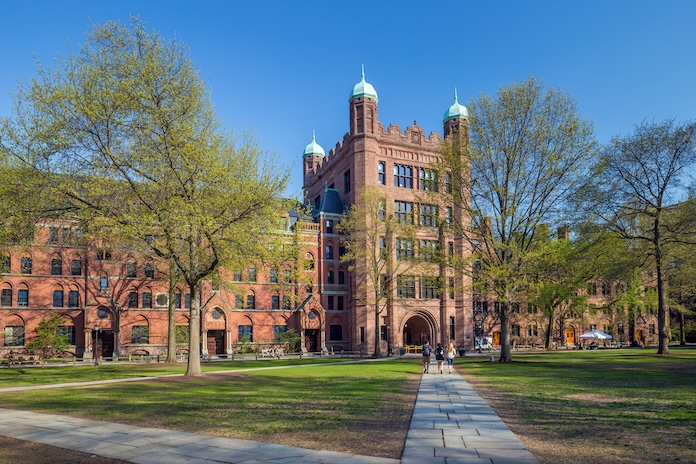
Recently, Yale’s Graduate School of Arts and Sciences confirmed they’re reducing enrollment by roughly 13% in the humanities and social sciences and 5% in STEM fields over the next three years. Their decision is tied largely to financial strain, particularly a sharp increase in the federal tax on university endowments, which is expected to cost the university hundreds of millions annually.
Graduate education is undeniably expensive. At Yale, PhD students receive full tuition, stipends, and health coverage for a minimum of five years, an investment of roughly $350,000 per student. From an administrative standpoint, reducing admissions may seem like the least disruptive option. But that framing overlooks a fundamental point: graduate students are not simply individuals being funded to study—their work is central to the university’s mission.
As Yale notes on its “Yale’s Impact on America” website, their PhD students drive research in areas ranging from cancer treatment to quantum computing and historical scholarship. Yale graduate students contribute “by advancing life-saving medical treatments, developing cutting-edge technology that increases national competitiveness and drives economic growth.” Reducing their numbers doesn’t just cut costs, it diminishes the production and advancement of knowledge itself.
What This Means for Prospective PhD Students: A Narrow Pipeline
Fewer grad admissions mean fewer opportunities for aspiring scholars, particularly in already competitive programs where acceptance rates hover around 5%. As a former Harvard GSAS admissions and financial aid officer, I can confirm these admit numbers are single digit —they fit on one little page.
So what happens next? Competition intensifies, applicants apply to more programs, and applicant pools become increasingly flooded, while the already narrow pipeline into academia tightens even further.
The Ripple Effect on Undergraduates
Another layer to consider is the impact on undergraduate students. Graduate students are not only researchers—they are also teachers. If you know a student in college right now, ask them about their favorite TA. It’s probably a PhD student. Today’s college students often have teaching assistants, teacher fellows, or research assistants who are graduate students. The research labs they join are often led by PhD candidates or post-docs. It’s not at all unusual for me to have a college student client state he or she has never met the professor whose lab it is, they work with the PhD students in the lab.
Applying to PhD Programs? You Don’t Have to Navigate This Alone.
Top Tier Admissions works with graduate school applicants at every stage—from identifying the right programs and building a compelling research statement to positioning your application in an increasingly competitive pool. Our Senior Private Counselors include specialists with direct experience in graduate admissions at schools like Harvard.
Learn About Graduate School Counseling →
Yale Is Not Alone: Other Universities Cutting PhD Admissions
Yale is not an isolated case. Other major universities are also reducing PhD admissions or pausing programs altogether (UChicago, George Washington University, Boston University, Brown and the New School most notably).
The Silver Lining: What Fewer PhD Spots Could Mean for Admitted Students
At first glance, top universities’ decisions to reduce graduate admissions feels disheartening—especially for prospective PhD students already facing steep competition. But there is a silver lining: more resources per student once you ARE admitted.
With fewer PhD students to support, universities are better positioned to:
- Maintain stipend levels, or even increase them as inflation continues to climb. Johns Hopkins University’s PhD stipend is $52,000 per year this August.
- Offer more personalized faculty mentorship (with research and publication opportunities)
- Fund dissertation fellowships to help see PhD students through to the end of their programs
- Offer stronger placement support post-degree, whether for faculty careers in academia or alternative academic careers, which are gaining legitimacy
What This Means for Your Graduate School Application Strategy
Yes, fewer spots make graduate admissions more competitive and globally, we’ve had heavy PhD oversupply. But, for those who can gain graduate admission (and we’d love to help!), they are likely to receive stronger support, clearer institutional commitment, and stronger long-term prospects post-degree.
Stay Connected for More Expert Guidance
Want to stay in the loop? Follow us on Instagram @toptieradmissions and subscribe to our blog for expert advice and admissions insights.
Know someone else navigating the college process? Pass it along—they’ll thank you later!

- College Admissions Calculator: What Today’s Applicants Should Know - October 13, 2026
- Graduate School Statement of Purpose: Insider Tips from a Former Harvard Admissions Officer - August 13, 2026
- The June College Waitlist Guide - May 28, 2026