
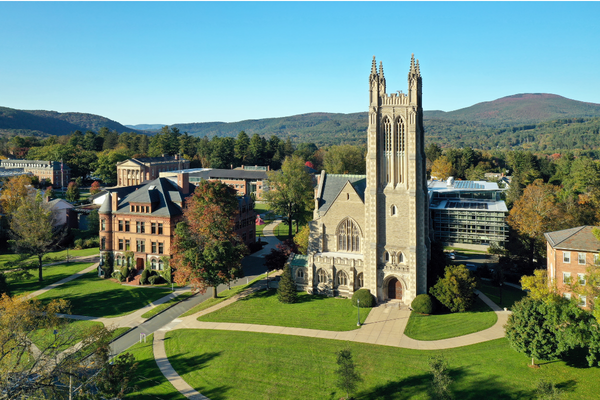
When our students begin visiting colleges, we encourage them to explore many different types of schools, considering institutions both big and small, urban and rural, public and private, etc. Students generally embrace this advice. They weigh the merits of large urban schools with open campuses against midsize schools in quaint college towns and compare the excitement of SEC football games with the practical benefits of colleges focused on co-ops and internships. There is, however, one kind of school that rarely gets much traction: small liberal arts colleges.
Over the past few years, many have pointed to the decline of liberal arts colleges, focusing on decreasing enrollment and struggling endowments at a handful of colleges. These discussions, combined with concerns about the social challenges of a small school and the fear that an “impractical” liberal arts education will produce a weak return on investment, have led many families to dismiss small liberal arts colleges out of hand. In reality, liberal arts colleges can be an excellent fit for many students, offering a robust education and excellent post-graduate opportunities.
Benefits of Liberal Arts Colleges
A focus on teaching: Students at large research universities are frequently surprised by how hard it is to connect with their professors. Faculty members focus on research over teaching, and undergraduate classes, particularly those for first- and second-year students, are often massive lectures or seminars taught by graduate students. In contrast, liberal arts colleges prioritize teaching, focusing on pedagogical skills in the hiring and tenure process. Classes tend to be smaller, giving professors a chance to get to know their students individually and offering more opportunities for personalized support and feedback. Especially for quieter students who might struggle to self-advocate, this emphasis on close faculty relationships helps ensure they have the resources they need to thrive. Without competition from graduate students, undergrads at liberal arts colleges also frequently find it easier to access research opportunities, deepening their education and positioning them well for graduate or professional school in the future.
Flexible (not impractical) degrees: In contrast to a technical or pre-professional degree, a liberal arts education offers (in Princeton’s words) “an expansive intellectual grounding in all kinds of humanistic inquiry.” To some families, this broad focus can seem unhelpfully fuzzy, especially in contrast to a practical degree in, say, engineering or business. In reality, the skills students cultivate while pursuing a liberal arts degree can apply to many different fields. (As I have noted before, the English majors I taught at UVA went on to pursue jobs ranging from journalism to medicine to software engineering.) Especially as AI shakes up various professional fields, it can actually be advantageous to develop a wide-ranging skillset that offers students opportunities to pivot between careers. And for those students whose liberal arts explorations teach them that they love engineering? Their small liberal arts college might offer an engineering major or a 3+2 program in conjunction with a nearby research university.
Strong ROI: Some families fear that students who attend small liberal arts colleges will fare poorly once they enter the workforce, especially in comparison to students from large research universities. However, a 2020 study by the Georgetown Center on Education and the Workforce contradicts this view, noting that the median ROI at liberal arts institutions is actually higher than at most other types of four-year institutions. This is especially true at the most selective small liberal arts colleges, such as Claremont McKenna and Washington and Lee, which rank among the very top colleges in ROI after 40 years. Partly because of the opportunities they offer for close relationships with faculty mentors, liberal arts colleges can also be particularly great launchpads for students considering graduate and professional schools. For example, Harvey Mudd College is among the very top producers of students who go on to pursue PhDs in science and engineering, while a striking 85-90% of applicants from Williams College are accepted to medical school each year.
Affordability: While the sticker price of small liberal arts colleges can be daunting, recent surveys reveal that most students at private colleges (including small liberal arts colleges) receive some form of institutional grant aid. This is, in fact, an enrollment management strategy for many liberal arts colleges, which frequently use merit aid to attract students. As Jeff Selingo notes in Dream School, excessive tuition discounts can sometimes be a red flag, evidence that a school is scrambling to bring in new students to keep it afloat. At many liberal arts colleges, however, merit aid is not a warning sign but an opportunity, offering a chance to get an excellent education at a surprisingly reasonable price.
At the end of the day, liberal arts colleges won’t be a fit for all students, especially those looking for large campus communities or hoping to spend their weekends at crowded football stadiums. For some, however, small liberal arts colleges can be an excellent, if unexpected, fit. To those students we say: book the campus tour. You won’t regret it.
Stay Connected for More Expert Guidance
Want to stay in the loop? Follow us on Instagram @toptieradmissions and subscribe to our blog for expert advice and admissions insights.
Know someone else navigating the college process? Pass it along—they’ll thank you later!

- Early Decision & Early Action Deadlines for Major Colleges (Class of 2031) - September 10, 2026
- Liberal Arts Colleges: Why the “Small School” Choice Is Smarter Than Most Families Think - July 29, 2026
- How to Choose a College Major - June 11, 2026

One reply on “Liberal Arts Colleges: Why the “Small School” Choice Is Smarter Than Most Families Think”
Schools like Washington & Lee have successful grads because their families have some of the highest incomes in the nation- it’s around $250,000 a year. With those connections, you could go to any college- or even no college- and get a job. These are very wealthy, influential and connected people. It’s interesting that nobody looks at these stats when they review outcomes, which have to be considered in relation to family wealth. Another one with super high family incomes is Colgate University and non-LACs, like WashU. and Georgetown. These are some of the richest people in the country, so naturally their kids are gonna get good jobs. This really has no connection to the education whatsoever.