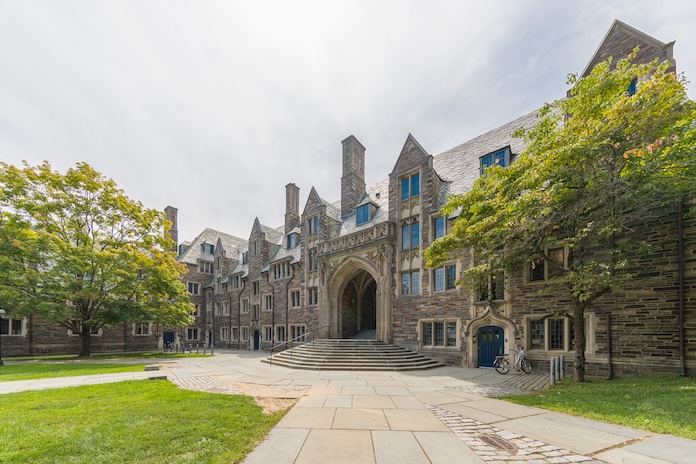
Every fall, families across the country scramble to interpret the latest college rankings, treating them as if they were gospel. But here’s the truth: rankings, including those from U.S. News & World Report, are not definitive roadmaps to educational quality. They’re built on formulas that often prioritize prestige, selectivity, and future earnings over other critical factors: fit, value, and outcomes for students. In her recent article for Forbes, Top Tier Admissions CEO, Dr. Liz Doe Stone walks families through the myths and mechanics behind rankings, and how to use them effectively in the early stages of your college list building.
COLLEGE RANKINGS: SHIFT YOUR FOCUS
College rankings can be a useful starting point, but they should never be the final word. A school that ranks 22nd nationally might offer a better education, experience, and return on investment for your child than one in the top 5, depending on what your student needs.
Our advice? Focus on factors like graduation rates, affordability, alumni outcomes, and campus culture. Use rankings as one piece of a much larger puzzle, not as a shortcut to a complex decision that deserves more than a number.
U.S. NEWS & WORLD REPORT: COLLEGE RANKINGS 2026
In the 2026 U.S. News & World Report rankings, Princeton University maintains its position as the top national university, followed by MIT in second and Harvard University in third. Williams College once again leads the list of national liberal arts colleges. Among public institutions, UC Berkeley ranks as the top public national university, with UCLA and the University of Michigan–Ann Arbor close behind. Notable shifts this year include the University of Chicago, which jumped five spots into the top 10, and Caltech, which dropped five places.
Below are their top 25 national liberal arts colleges and top 25 national universities from the 2026 rankings.
TOP 25 NATIONAL LIBERAL ARTS COLLEGES
1. Williams College
2. Amherst College
3. United States Naval Academy
4. Swarthmore College
5. Bowdoin College (tie)
5. United States Air Force Academy (tie)
7. Claremont McKenna College (tie)
7. Pomona College (tie)
7. Wellesley College (tie)
10. Carleton College (tie)
10. Harvey Mudd College (tie)
10. United States Military Academy at West Point (tie)
13. Barnard College (tie)
13. Davidson College (tie)
13. Grinnell College (tie)
13. Hamilton College (tie)
13. Middlebury College (tie)
13. Smith College (tie)
13. Vassar College (tie)
13. Wesleyan University (tie)
21. Washington & Lee University
22. Colgate University (tie)
22. University of Richmond (tie)
24. Bates College (tie)
24. Colby College (tie)
24. Haverford College (tie)
TOP 25 NATIONAL UNIVERSITIES
1. Princeton University
2. Massachusetts Institute of Technology (MIT)
3. Harvard University
4. Stanford University (tie)
4. Yale University (tie)
6. University of Chicago
7. Duke University (tie)
7. Johns Hopkins University (tie)
7. Northwestern University (tie)
7. University of Pennsylvania (tie)
11. California Institute of Technology (Caltech)
12. Cornell University
13. Brown University (tie)
13. Dartmouth College (tie)
15. Columbia University (tie)
15. UC Berkeley (tie)
17. Rice University (tie)
17. UCLA (tie)
17. Vanderbilt University (tie)
20. Carnegie Mellon University (tie)
20. University of Michigan–Ann Arbor (tie)
20. University of Notre Dame (tie)
20. Washington University in St. Louis (tie)
24. Emory University (tie)
24. Georgetown University (tie)
BUILDING YOUR COLLEGE LIST: VIBE MATTERS
Once you’ve done your due diligence researching schools, liberal arts colleges and national universities alike, ensuring your data points match up, it’s time to dig deeper into what really makes a college the right fit. Rankings still matter, but so does something harder to quantify: vibe. Defining what that means to you, academically, socially, financially, and personally, starts with building a balanced college list. Once your target schools are in place, it’s time to tell your story and make your voice heard.
Want to stay in the loop? Follow us on Instagram @toptieradmissions and subscribe to our blog for expert advice and admissions insights.
Know someone else navigating the college process? Pass it along — they’ll thank you later!