
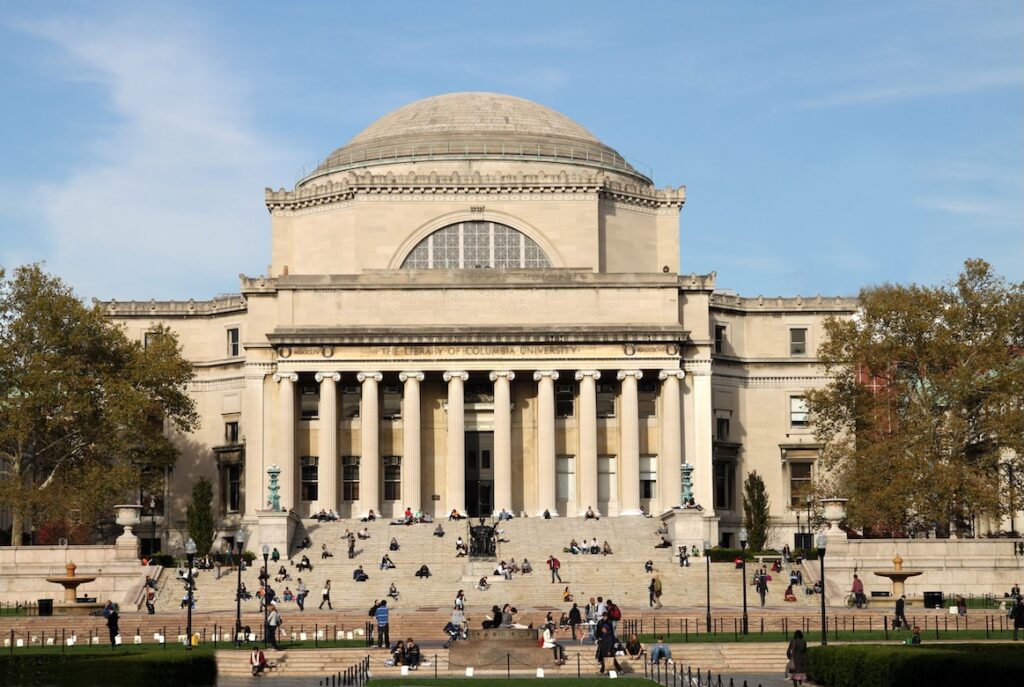
Columbia University, located in the heart of Manhattan, is known for its commitment to the liberal arts and its strengths as a research institution. Each year it draws tens of thousands of applicants with impressive grades, test scores and extracurriculars, and the Common Application leaves little room to distinguish one candidate from the next.
This is where Columbia’s supplemental questions come in. They ask for details that make you who you are: what you read, what you’re curious about, and why Columbia and New York City are the right fit. This exercise should feel different from listing your activities on the Common App. It’s a chance to expand on the distinct qualities that make you who you are.
Required Supplements
Columbia states the purpose of its required supplemental prompts on its website: “These questions provide insight to your intellectual curiosity, habits of mind, love of learning and sense of self. They also allow the Admissions Committee to learn more about you in your current community and why you feel Columbia’s distinctive experiences in and out of the classroom would be a good fit for your undergraduate education.” Because Columbia spells out what it’s looking for, you can write with that purpose in mind, and it’s a good sign that these responses will carry real weight in your admission decision.
Columbia requires six supplemental responses: a list with a 100-word limit, then five short essays at 150 words each:
| Prompt | Word Limit | What is Columbia Testing? |
| List the titles of texts, resources and outlets that have contributed to your intellectual development outside of academic courses, including but not limited to books, journals, websites, podcasts, essays, plays, presentations, videos, museums and other content that you enjoy. | 100 | Intellectual curiosity and love of learning beyond the classroom: what you seek out on your own and how wide your interests are. |
| Tell us about an aspect of your life so far or your lived experience that is important to you, and describe how it has shaped the way you would learn from and contribute to Columbia’s multidimensional and collaborative environment. | 150 | Sense of self and how you’d contribute to a collaborative, multidimensional community. |
| At Columbia, students representing a wide range of perspectives are invited to live and learn together. In such a community, questions and debates naturally arise. Please describe a time when you did not agree with someone and discuss how you engaged with them and what you took away from the interaction. | 150 | Habits of mind: how you engage across differing views, listen, and learn. |
| In college/university, students are often challenged in ways that they could not anticipate. Please describe a situation in which you have navigated through adversity and discuss how you changed as a result. | 150 | Resilience and self-awareness: how you handle the unexpected and what changed in you afterward. |
| Why are you interested in attending Columbia University? We encourage you to consider the aspect(s) that you find unique and compelling about Columbia. | 150 | Fit: whether you understand what is distinctive about Columbia, in and out of the classroom, and why it suits you. |
| What attracts you to your preferred areas of study at Columbia College or Columbia Engineering? *Note: This short answer question will only appear if you have selected Columbia College or Columbia Engineering in the “Academics” section of Columbia’s application questions. | 150 | Academic direction: the specific interests that draw you to Columbia College or Columbia Engineering |
The List Response
Prompt 1: List the titles of texts, resources and outlets that have contributed to your intellectual development outside of academic courses, including but not limited to books, journals, websites, podcasts, essays, plays, presentations, videos, museums and other content that you enjoy.
- What this prompt is really asking: Columbia wants to see what you read, watch, and listen to when no one is grading you. The list is a snapshot of your interests and curiosity.
- What great looks like: A list with range and a point of view. Mix a few unexpected items (a podcast, a museum, a journal) with the books you love, and let the pattern show who you are. Include only what you’ve genuinely engaged with.
- Pitfall: Padding with titles that sound impressive. An admissions reader can usually tell the difference between “I loved this” and “I wanted to be seen reading this.”
TTA Top Tip: Follow Columbia’s formatting instructions exactly: commas or semicolons, no numbering, no author names, subtitles, or explanatory remarks.
Short Essays
Prompt 2: Tell us about an aspect of your life so far or your lived experience that is important to you, and describe how it has shaped the way you would learn from and contribute to Columbia’s multidimensional and collaborative environment.
- What this prompt is really asking: Who are you, and what will you bring to a collaborative community? Columbia wants an experience that has shaped how you learn and contribute.
- What great looks like: One specific aspect of your life, with a clear link to how you’d show up in a Columbia classroom or in the larger campus community.
- Pitfall: Describing the experience at length and leaving no words for the second half of the prompt. At 150 words, the “how it shaped you” part has to carry real weight.
Prompt 3: At Columbia, students representing a wide range of perspectives are invited to live and learn together. In such a community, questions and debates naturally arise. Please describe a time when you did not agree with someone and discuss how you engaged with them and what you took away from the interaction.
- What this prompt is really asking: Columbia is built on diverse perspectives and experiences. This tests how you will embrace a diverse learning environment and productive debate.
- What great looks like: A real disagreement with real stakes, a description of how you engaged (what you asked, what you heard), and an honest takeaway.
- Pitfall: Writing a story where you were simply right and the other person came around. The prompt asks what you took away, so a lesson only the other person learned will fall flat.
College Essay Guidance
Experience personalized, expert guidance to elevate your college essays and secure your spot at top universities.
Prompt 4: In college/university, students are often challenged in ways that they could not anticipate. Please describe a situation in which you have navigated through adversity and discuss how you changed as a result.
- What this prompt is really asking: How do you meet challenges you didn’t see coming, and what changes in you afterward?
- What great looks like: An honest account of the difficulty, the specific action you took, and a genuine “before and after” in how you think or act now.
- Pitfall: Choosing the biggest-sounding hardship over the one you can reflect on most honestly. A smaller challenge with real insight beats a dramatic one with a generic lesson.
Prompt 5: Why are you interested in attending Columbia University? We encourage you to consider the aspect(s) that you find unique and compelling about Columbia.
- What this prompt is really asking: Do you understand what is distinctive about Columbia, in and out of the classroom, and why it is a good fit?
- What great looks like: Two or three specific, Columbia-only details tied directly to your interests and goals. Think about the Core Curriculum, particular courses, research centers, student groups, or ways you’d embrace New York City.
- Pitfall: Naming prestige, location, or a rigorous academic environment. These are generic and could describe a dozen schools.
Prompt 6: What attracts you to your preferred areas of study at Columbia College or Columbia Engineering? *Note: This short answer question will only appear if you have selected Columbia College or Columbia Engineering in the “Academics” section of Columbia’s application questions.
- What this prompt is really asking: What draws you to your intended field, and have you thought about how you’d pursue it at Columbia College or Columbia Engineering?
- What great looks like: Evidence that your interest has a history (a project, a question, a course), plus a sense of where it might go next.
- Pitfall: Repeating prompt 5. Use this one for academics, and save campus life and community for the “Why Columbia” essay.
TTA Top Tip: With 150 words per response, resist the urge to include everything. Pick one story or idea per prompt and go deep. Write long first, then cut, since the real beginning is often in the middle of your first draft.
FAQs
How many supplemental responses does Columbia require?
Columbia asks for one list response (100 words or fewer) and five short essays (150 words or fewer each).
What is Columbia looking for in these responses?
Columbia says the questions provide insight into your intellectual curiosity, habits of mind, love of learning, and sense of self, and into how you’d fit Columbia’s distinctive experiences in and out of the classroom.
How is the supplement different from the Common App activities list?
The activities list records what you’ve done. The supplement is where you show how you think, what you’re curious about, and what you’d bring to the community. Treat each response as a chance to add something the rest of your application doesn’t already say.
How do I answer the list question?
Separate items with commas or semicolons. You don’t need to number them, put them in any order, italicize or underline titles, or add author names, subtitles, or explanatory remarks.
When should I start writing?
Early. Six short responses are easier to do well when you can draft, step away, and revise than when you’re squeezing them in just before the deadline.
Why Columbia’s Supplemental Essays Matter
Columbia’s supplemental questions aren’t just another place to list what you’ve accomplished. Instead, they are an opportunity to show how you think, what you’re curious about, and what you’d bring to the vibrant campus community. Done well, these 650 or so words can add significant value to the rest of your application.
Stay Connected for More Expert Guidance
Follow us on Instagram @toptieradmissions and subscribe for more expert advice and admissions insights.
Know someone else navigating the college admissions process? Pass it along, they’ll thank you later!