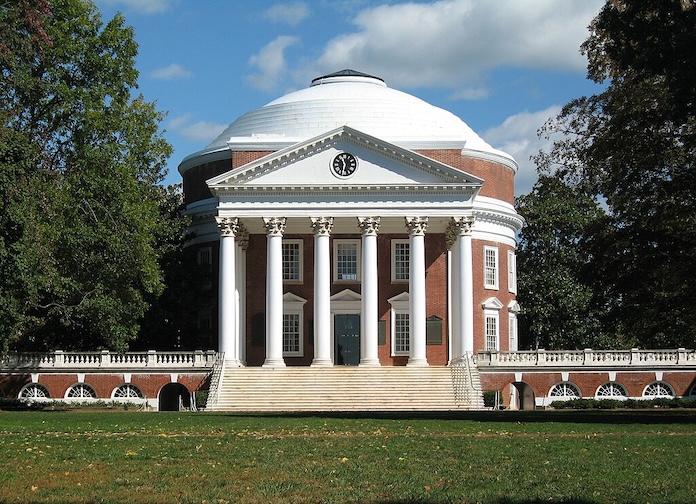
The University of Virginia (UVA), a flagship public research university in Charlottesville and a UNESCO World Heritage Site, admitted 10,287 students to the Class of 2030 from a record 82,118 applications, according to the Cavalier Daily. The applicant pool grew 27% in a single year—the largest increase in the university’s history—pushing UVA’s overall acceptance rate to 12.5%, down from 16.3% the previous cycle.
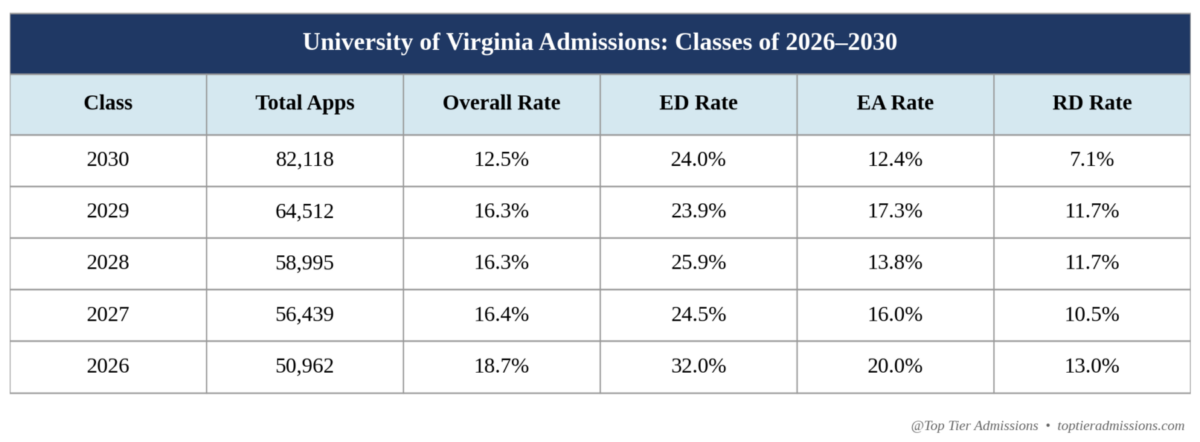
UVA is one of the few selective universities that still offers three distinct application rounds: binding Early Decision (ED), non-binding Early Action (EA), and Regular Decision. Each pathway draws a different mix of applicants and each produces a different acceptance rate. For the Class of 2030, ED applicants were admitted at a 24% acceptance rate, EA applicants at 12.4%, and RD applicants at just 7.1%.
UVA Acceptance Rate
The drop in UVA’s overall acceptance rate is volume-driven. Total applications rose from 64,512 to 82,118, while the admit count held nearly steady at 10,287 (down only slightly from 10,530 last year). With a similar number of seats and far more applicants, the rate compressed across every pathway, but most sharply in Regular Decision, where the rate fell from 11.7% to 7.1% in a single cycle.
How Residency Affects Your Odds at UVA
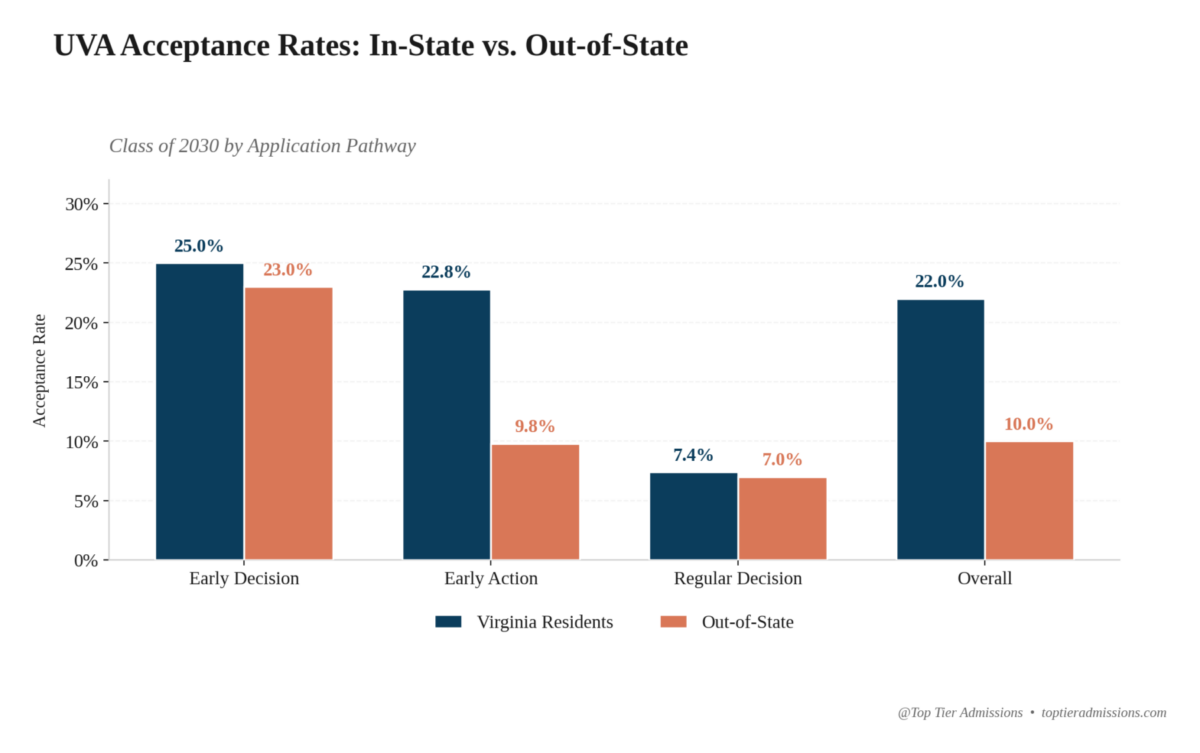
Geography shapes the math at UVA more than at almost any other selective university. As a public institution, UVA is required by state policy to enroll roughly two-thirds Virginia residents, which produces structurally different odds depending on where an applicant lives. For the Class of 2030, in-state applicants were admitted at 22% overall, while out-of-state applicants faced a 10% rate, a gap that has held roughly steady over five years even as both numbers have fallen. Where the gap appears, however, varies sharply.
Early Decision Is the Great Equalizer for Out-of-State Applicants
Early Decision is the great equalizer. The residency gap there is just two points (25% versus 23%), and it has narrowed sharply over four years—from a 14-point gap for the Class of 2027. Early Action, by contrast, continues to reward Virginia residents heavily: in-state EA applicants are admitted at more than twice the out-of-state rate. Regular Decision is brutal for both groups. For out-of-state families, the implication is straightforward: of UVA’s three pathways, Early Decision is the one where residency matters least.
Looking across five years, ED rates ran higher for the Classes of 2026 and 2027, when UVA’s program was still relatively new and applicant pools were smaller, then settled into a steadier range near 24% from the Class of 2028 onward. Across the same period, overall and Regular Decision rates have moved in the opposite direction, falling sharply as application volume has climbed. The result is a widening gap between early and regular rounds: Regular Decision applicants to the Class of 2030 succeeded at roughly a third the rate of ED applicants.
What UVA Is Really Looking For
TTA Top Tip: UVA does not consider demonstrated interest. Campus visits, emails, and contact with the office are not factored into decisions. What does matter is what you say in your application: a thoughtful response that shows genuine understanding of UVA and why it fits you. Early Decision can still improve your statistical odds, since the binding round admits at a higher rate than Regular Decision, but that reflects the structure of the round rather than any credit for showing interest.
Should You Apply Early Decision to UVA?
At Top Tier Admissions, we are committed to making the college admissions process more transparent. Easy access to clear data helps families understand trends in college admissions to make more informed decisions. This year we’re once again collecting acceptance rate data at selective schools and providing insight and analysis of our own.
Explore Additional Resources
Are you thinking about applying to UVA? Curious about admissions trends and strategies to improve your odds? Contact us to discuss our Application Boot Camp® or Private Counseling program—we look forward to supporting you!
- How to Get Into the University of Virginia
- Average GPA and Class Rank at Top Colleges
- Average SAT Scores at Top Colleges
- The New Ivies 2026: What Changed and What It Means for Applicants
- When Does the Common App Open? What Rising Seniors Should Do Before August 1
- Do AP Scores Matter for College Admissions? Here’s What Admissions Officers Actually Look For
Stay Connected For More Expert Guidance
Want to stay in the loop? Follow us on Instagram @toptieradmissions and subscribe to our blog for expert advice and admissions insights.
Know someone else navigating the college process? Pass it along—they’ll thank you later!
- Johns Hopkins Supplemental Essay 2026-2027 - October 9, 2026
- Get to Know College Admissions Expert, Kayte Hager - October 1, 2026
- U.S. News College Rankings 2027: MIT Is No. 1, Princeton Drops - September 22, 2026