When Forbes first introduced the concept of the “New Ivies,” it reframed a conversation that had long been overdue: prestige is no longer synonymous with the Ivy League.
In our earlier analyses, Introducing the New Ivies and the New Ivies: 2025 Edition, we explored how employer sentiment was shifting toward schools that consistently produce graduates who are capable, adaptable, and ready to contribute from day one. The 2026 New Ivies list reinforces that trend. But this year, something has changed in the story the list is telling. It’s no longer just about which schools made the cut. It’s about why and what those schools are doing differently.
What Stayed the Same: Stability at the Top
One of the most striking takeaways from the 2026 list is how little it changed. Schools like Rice, Vanderbilt, Michigan, Georgia Tech, and UNC Chapel Hill remain firmly in place, and that consistency is itself a signal. Employer trust isn’t built overnight, and it isn’t won by climbing a ranking. It’s earned through years of producing graduates who show up, think clearly, and grow into leaders. These institutions have done exactly that — long enough that they’re no longer emerging. They’re established.
For families, this is reassuring news and reinforces something we often emphasize: You don’t need a “new list” every year to find the right schools. You need a strategy.
Application Boot Camp®
Need strategic guidance from start to finish?
What Changed: Two Additions That Tell a Bigger Story
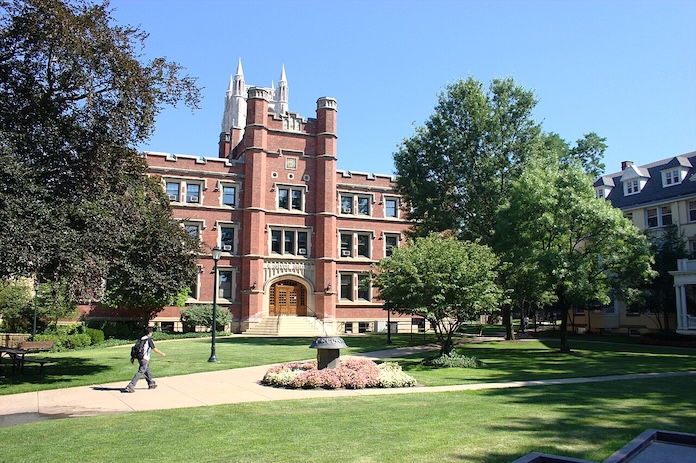
The 2026 list introduces two new schools: Case Western Reserve University and the U.S. Air Force Academy. At first glance they might seem like an unlikely pair, but together they tell a remarkably coherent story about what employers are now looking for.
Case Western’s inclusion reflects the growing premium placed on applied, hands-on learning. The university has expanded its AI coursework and deepened its partnerships with industry — signaling to employers that its graduates don’t just understand concepts, they can put them to work. This aligns with what we see playing out in admissions and the workplace alike: research tied to real problems carries more weight than a polished résumé, internship depth matters more than breadth, and demonstrated initiative will always outshine passive achievement.
The Air Force Academy tells a different but complementary story. Its addition highlights something the employer conversation doesn’t always make explicit: technical fluency alone isn’t enough. What companies are increasingly hunting for are people who can lead under pressure, think in systems, and make sound decisions in complex, uncertain environments. In an age of AI, the scarcest resource isn’t someone who can write code, it’s someone who knows what to do with the output.
The Biggest Shift: AI Is Now the Throughline
In previous years, the New Ivies conversation centered on outcomes like graduation rates, starting salaries, employer placements. In 2026, it centers on something more forward-looking: adaptation.
Across all twenty schools on the list, one theme is unmistakable. AI fluency is no longer a differentiator. It’s a baseline. Purdue now requires AI competency for graduation. Florida has integrated AI across every major. Rice has woven it into both technical and humanities coursework.
But here’s the nuance that matters most: the schools earning employer trust aren’t simply teaching students to use AI. They’re doubling down on developing what AI cannot replace: creativity, judgment, the ability to communicate across disciplines, and the intellectual flexibility to navigate problems that don’t yet have names.
The Quiet Return of the Liberal Arts
Perhaps the most unexpected insight from this year’s report is the re-emergence of the liberal arts, not as a fallback or a consolation, but as a genuine strategic advantage. Employers are increasingly vocal about their need for graduates who can reason through complexity, navigate ethical gray areas, and communicate across fields. The future, it turns out, is not STEM or the humanities. It’s the integration of both. Schools that combine intellectual rigor with breadth of perspective continue to outperform, and the 2026 list reflects that reality.
What This Means for Students (and Families)
The New Ivies are not a set of schools to target, they are a signal of what matters now: students who think deeply, engage authentically with ideas, and have positioned themselves with intention in a way that aligns with institutional priorities. Employers have already figured this out.
What Forbes is now formalizing, we’ve been seeing for years. The families who benefit most are the ones who recognize this shift early and build toward it, rather than chasing the echo of a prestige culture that has already begun to fade.
This is exactly where thoughtful, experienced guidance makes a difference. Whether through our Private Counseling program or Application Boot Camp®, working closely with a senior counselor—many of whom have sat on the other side of the admissions table—means translating these broad shifts into a clear, personalized strategy. It’s not just about where to apply, but how to position a student’s academics, activities, and narrative so they resonate in committee. The result is an application that is not only cohesive and compelling, but intentionally aligned with how decisions are actually made.
The list isn’t ahead of the curve. It’s finally catching up to a reality that the most thoughtful counselors, employers, and educators have been living for years. Because ultimately, the advantage isn’t choosing the “right” list. It’s building a student profile that will stand out on any list.
Stay Connected for More Expert Guidance
Want to stay in the loop? Follow us on Instagram @toptieradmissions and subscribe to our blog for expert advice and admissions insights.
Know someone else navigating the college process? Pass it along — they’ll thank you later!
- Johns Hopkins Supplemental Essay 2026-2027 - October 9, 2026
- Get to Know College Admissions Expert, Kayte Hager - October 1, 2026
- U.S. News College Rankings 2027: MIT Is No. 1, Princeton Drops - September 22, 2026