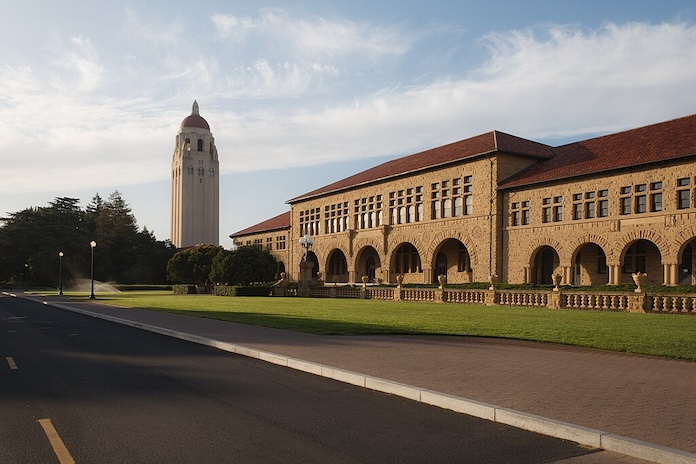
Stanford will reintroduce standardized testing requirements for undergraduate admissions starting in fall 2025 for admission to the Class of 2030. For rising seniors (students applying in fall 2024), Stanford will remain test-optional.
Most recently, Harvard & Cornell announced changes to their testing policy, requiring students to submit either an SAT or ACT score in future application cycles. Other Ivy League institutions, including Dartmouth College, Yale University, and Brown University, have also recently announced they would require standardized test scores again, effective for the Class of 2029.
Stanford’s official announcement noted that “Performance on standardized tests is an important predictor of academic performance at Stanford, a review by the faculty Committee on Undergraduate Admission and Financial Aid has confirmed.” They will continue to review applications in context, however, and affirm their holistic approach to academic achievements and potential in light of each student’s unique background.
A DIVIDED CAMPUS
The Stanford Daily News has been closely following the recent changes in standardized testing policies, as well as divisions on campus regarding Stanford’s position.
A recent article quoted Richard Ford, a professor at Stanford Law School (SLS), who wrote that standardized test scores provide universities with a scalable metric in the admissions process. Without standardized test scores to use as a metric, judging applicants based on “grades and high school reputation … might be as bad or worse [than standardized testing] with respect to class and race bias.”
At the same time, students have expressed reservations about these changes and the ways that standardized testing can enforce inequality due to the financial and time-based burden these tests can place on students.
Stanford is also navigating leadership changes as President Richard Saller prepares to hand over leadership to Jonathan Levin on August 1 after a tumultuous year on campus. The incoming President will be faced with a bill to prohibit legacy and donor admissions preferences at private universities, passed by the California State Assembly, and allegations of discrimination in the Stanford admissions office.
STANFORD REINSTATES THE SAT: THE TOP TIER TEAM WEIGHS IN
Dr. Eliza Fox, TTA Senior Private Counselor (and Stanford alum)
Stanford’s return to standardized testing requirements may feel like a big change, but in recent years, roughly 70% of enrolled freshmen applied with SAT or ACT scores on record. This suggests that, even during its test-optional years, Stanford prioritized students with strong test scores in the admissions process.
Dr. Liz Doe Stone, TTA President
Stanford’s announcement offers crucial clarity for many applicants, particularly in light of the university’s clear preference for those who submitted scores under the test-optional policy. This development is likely to drive even higher application numbers to test-blind California schools in the 2025-26 cycle, especially UCLA and UC Berkeley. It’s notable that Stanford’s announcement came on the heels of public campus unrest when Pro-Palestinian demonstrators occupied the school president and provost’s offices. The incoming Stanford President will confront a challenging period characterized by declining confidence in higher education, rising tuition costs, and political controversies.
Dr. Michele Hernandez, TTA Co-Founder and CXO
Stanford joins most of the Ivies and top colleges by returning to requiring test scores. After studies showed clearly that NOT requiring test scores ended up suppressing applications from lower-income students, the tide has turned in regards to standardized testing. Looking ahead, we suspect more colleges will revert to requiring SAT scores for all students. Because these colleges already receive a record high number of applicants, we don’t anticipate that requiring scores will diminish the number of applicants by a significant amount.
If you enjoyed this post, follow us on Instagram @toptieradmissions for more tips and subscribe to our blog for expert insights & college admissions news!
- Johns Hopkins Supplemental Essay 2026-2027 - October 9, 2026
- Get to Know College Admissions Expert, Kayte Hager - October 1, 2026
- U.S. News College Rankings 2027: MIT Is No. 1, Princeton Drops - September 22, 2026