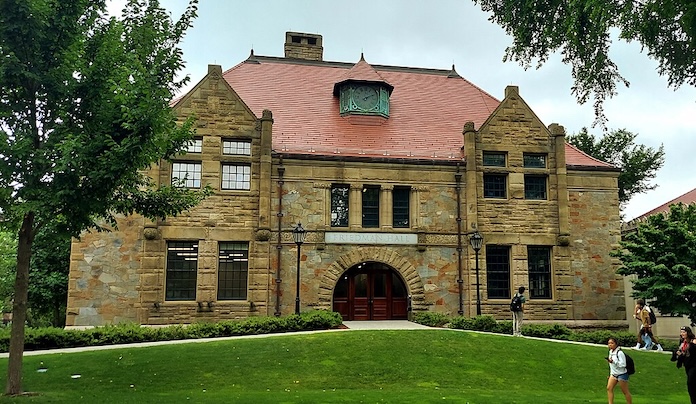
Brown University, an Ivy League institution in Providence, Rhode Island, admitted 890 of 5,406 Early Decision applicants to the Class of 2030 for an acceptance rate of 16.5%, according to the Brown Daily Herald. This rate marks a decrease from last year’s 17.9%, though it remains above the historic low of 13% set by the Class of 2027.
Brown University Early Acceptance Rate
Early Decision applications increased by nearly 400 this cycle, while the number of admits decreased slightly from 906 to 890. The rebound in applications suggests that prospective students have adjusted to Brown’s testing requirements, now in their second year. Brown reinstated mandatory SAT or ACT scores for the Class of 2029 after several years of test-optional admissions.
| Class | ED Applications | ED Admits | ED Rate | Overall Rate |
| 2030 | 5,406 | 890 | 16.5% | TBD |
| 2029 | 5,048 | 906 | 17.9% | 5.65% |
| 2028 | 6,244 | 898 | 14.4% | 5.16% |
| 2027 | 6,770 | 879 | 13.0% | 5.23% |
While Early Decision rates have fluctuated with application volume, Brown has admitted a consistent number of ED students each year—between 879 and 906. Overall acceptance rates, by contrast, have remained stable in a narrow band between 5% and 6%. If these patterns hold, we expect the Class of 2030 overall rate to fall within a similar range when Regular Decision results are announced in the spring.
The university did not release deferral statistics for the Class of 2030. For context, 17.8% of Class of 2029 Early Decision applicants were deferred to the Regular Decision pool, continuing a trend of declining deferral rates over recent years.
Application Boot Camp®
Need strategic guidance from start to finish?
According to a university press release, this year’s admitted students demonstrated “a commitment to collaboration, the self-motivation to be architects of their own education, and a desire to solve problems and make a difference in the world.” These qualities align with Brown’s distinctive Open Curriculum, which empowers undergraduates to design their own course of study without distribution requirements. The university also admitted 23 students to the Program in Liberal Medical Education (PLME), the highly competitive eight-year combined undergraduate and medical degree program, and continues to offer the five-year Brown-RISD Dual Degree program for students seeking to integrate liberal arts with studio art and design.
TTA Top Tip: In 1969, Brown University eliminated distribution requirements and established the Open Curriculum, allowing students to become “architects of their own education.” This progressive approach has long distinguished Brown from its Ivy League peers. However, this flexibility does not make the college less selective. Brown seeks applicants with a rigorous, well-rounded academic background across all four years of high school. We recommend starting curriculum planning early if Brown is on your student’s shortlist.
At Top Tier Admissions, we are committed to making the college admissions process more transparent. Easy access to clear data helps families understand trends in college admissions to make more informed decisions. This year we’re once again collecting early acceptance rate data at selective schools and providing insight and analysis of our own.
College Private Counseling
Unlock your full potential.
Want To Read More?
Are you thinking about applying to Brown University? Curious about admissions trends and strategies to improve your odds? Contact us to discuss our Application Boot Camp® or Private Counseling program—we look forward to supporting you!
- Get Into Brown: 5 Insider Tips
- Brown University: Supplemental Essays 2025-2026
- Brown University: Class of 2029 Acceptance Rate
- Brown University: Acceptance Rates & Statistics
- Average GPA and Class Rank at Top Colleges
Want to stay in the loop? Follow us on Instagram @toptieradmissions and subscribe to our blog for expert advice and admissions insights.
Know someone else navigating the college process? Pass it along — they’ll thank you later!
- Johns Hopkins Supplemental Essay 2026-2027 - October 9, 2026
- Get to Know College Admissions Expert, Kayte Hager - October 1, 2026
- U.S. News College Rankings 2027: MIT Is No. 1, Princeton Drops - September 22, 2026