
We can hardly believe the new school year is here! Whether you’re a student getting back into the swing of things, or a parent preparing your child for the upcoming academic year, a little planning can make a big difference in ensuring academic success.
To get you ready, our Senior Private Counselors weigh in with their essential back-to-school tips and ways the Top Tier team can support your family this fall.
BACK TO SCHOOL WITH TTA
Create and Maintain a Routine
Getting back into a school routine can be challenging after the freedom of summer break. Start by getting your work space organized and establishing a consistent daily schedule and then stick to it. This includes setting regular wake-up and bedtime hours, as well as designated times for homework, meals, and extracurricular activities. A structured work space and routine helps your body and mind adjust more easily to the demands of the school year.
Dr. Tina Brooks’ Top Tip: After school starts, use your first weekend to organize your study space, pick up any supplies you’ve found out you need, and make sure your calendar/planner is up-to-date with your class schedule, school events, practices, and anything else you need to set aside time for. Don’t forget to schedule study breaks and time with friends!
Dr. Kristen Willmott’s Top Tip: Carve out a comfortable, distraction-free study space. Ensure it has a comfortable place to sit, a box or shelf to put your phone in or on (out of reach) and a clock and calendar. For visual learners, an old fashioned 60-minute sand timer could be an option for your space as well. Focus on key tasks for those 60 minutes, then take a break.
College Private Counseling
Develop an organized and effective application strategy that leverages your academic and extracurricular experience to stand out.
Reestablish Good Study Habits
Summer can disrupt study routines or maybe you never really established set study habits. Now is a great time to develop these or reevaluate and improve your study habits. Now that you’ve organized your study space as noted above, consider investing in organizational tools like planners or digital apps to keep track of assignments and deadlines. Developing a study schedule that breaks down tasks into manageable chunks can also be incredibly helpful.
Dr. Eliza Fox’s Top Tip: As you head back to school, take a look at the materials for your courses — the syllabi, your textbooks, your assigned readings — and try to get a sense of what you’ll be covering in the weeks ahead. If any of the material seems likely to be really challenging, get a support system in place now! This might mean reaching out to a tutor, taking advantage of your school’s resources (like a writing center), or setting up a meeting with your teacher to talk over complicated subject matter. When it comes to tough courses, it’s a good idea to have a support plan in place before things start to feel overwhelming!
Executive Functioning & ADHD Support
Guiding students in grades 4-12 to their full potential.
If you find that you’re struggling with organization and time management, or simply want to start the year with good strategies in place, consider the benefits of executive functioning tutoring. Our expert tutors provide personalized strategies to enhance time management, organization, and task initiation, empowering students to stay on track throughout the school year. Whether it’s managing assignments, balancing extracurriculars, or preparing for exams, our executive functioning support helps students develop the skills they need to succeed academically and maintain a balanced lifestyle.
Stay Healthy
Be sure you’re taking care of both your physical health and your mental health. If you’re feeling anxiety about returning to school, try practicing mindfulness or relaxation techniques that work for you. And we all know that eating healthy, good sleep and drinking plenty of water helps boost brain activity and energy levels and helps reduce stress.
Maria Laskaris’ Top Tip: Get enough sleep! Most teens need about 8 to 10 hours of sleep each night but early school start times, an increase in homework, a full slate of extracurricular activities and sometimes a part-time job, and our devices conspire to keep teens from getting the optimal amount of sleep. So, take control of your sleep habits — set regular bed and wake up times, stash devices far away from your bedroom, limit caffeine at night — and your developing mind (and body) will reward you with greater focus and better performance both in and out of the classroom.
Academic Tutoring
Our tutors offer customized tutoring designed to fit the needs of each student.
Set Goals
Take some time to set academic and personal goals for the year. Seeking a 5 on the AP Biology exam? You’ve got this! Put the time in and prep right alongside your coursework throughout the year to ensure you’re ready for the AP exams in May. Want to make the honor roll? An academic tutor can make a huge difference to boost your confidence in the toughest classes. Looking to join the Debate Club or become a class officer? Now is the time to take action. Having these goals set in your mind at the start of the year will help keep you motivated and focused.
Heidi Steinmetz Lovette’s Top Tip: Drop one activity. Go all-in on fewer activities rather than spreading yourself too thin. Consider all extracurriculars on your plate and drop one. What you have slipped into and are doing out of habit rather than current interest or future benefit?
AP Exam Tutoring
Our tutors offer customized tutoring designed to fit the needs of each student.
Bond with Your Teachers
Open communication with teachers is key to a successful school year. If you have any concerns or questions about the curriculum, assignments, or classroom expectations, don’t hesitate to reach out. Building a positive relationship with your teachers will enhance your learning experience and lead to stellar recommendation letters.
Dr. Liz Doe Stone’s Top Tip: Don’t wait until you need help to talk to your teachers–make it a goal to connect with them early in the school year. Drop by after class or send a friendly email introducing yourself. Better yet, share an article or ask a question related to the class material to show your engagement and curiosity! Building that relationship early will pay off down the road.
“MAGIC IN SEPTEMBER”
As you prepare for the school year ahead, keep in mind that our private counseling program fills up quickly every fall, our most popular enrollment time. By securing your spot now, you can ensure that your student will receive personalized guidance and support to navigate the academic year with confidence.
We leave you with one last tip from Anita Doar, TTA Senior Private Counselor:
In an essay titled “Magic in September,” former Georgetown University president and longtime professor Tim Healy wrote, “September is always ‘the spinning place,’” referring to the excitement, anxiousness, uncertainty, and possibility of a new academic year. The spinning place is upon us once again. Rather than feeling the need to push through it, or overcome it, or start off on some extraordinary note, take heart in knowing everyone feels it: students, teachers, parents, and yes, even your TTA counselors.
FREE TOP TIER ADMISSIONS WEBINAR TONIGHT
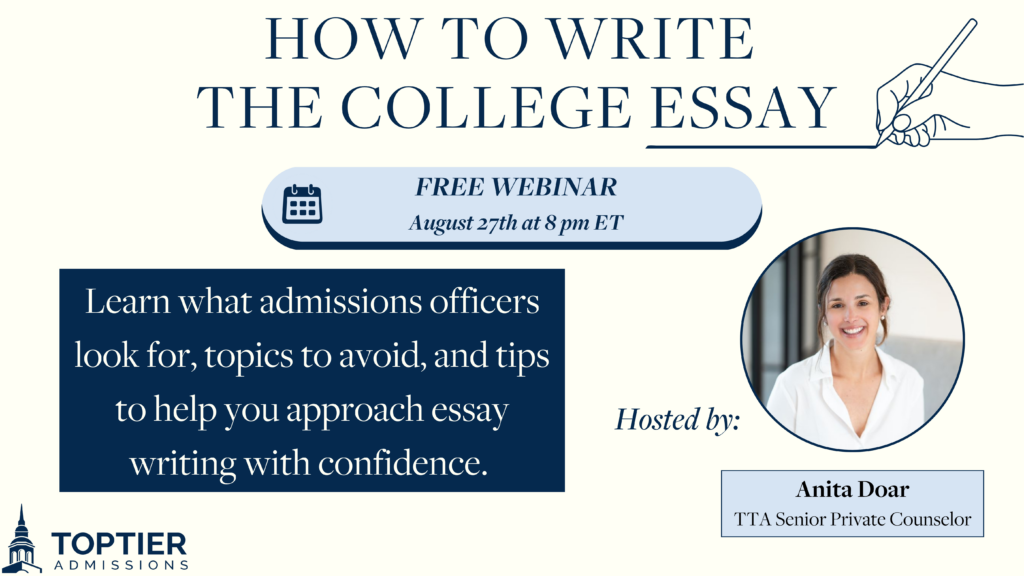
For most students, writing the Personal Statement is the first major application task they’ll undertake. With the challenge to “show who you are” in such a limited space, with so much conflicting advice about what college admissions officers “want to see,” and with such a changing landscape in admissions over the last few years, it can feel impossible to know where to start. Let us ease the stress of the process for you: join our webinar TONIGHT for an evening of practical tips and insider admissions insights to gain the knowledge and confidence to tackle this important step of your journey.
Here’s to a fantastic and fulfilling school year!