
Welcome to AP season—it’s exam prep crunch time! Whether you’re gearing up for AP English Language and Composition or AP English Literature and Composition, these exams are renowned for their rigorous assessment of critical thinking, analytical skills, and mastery of language.
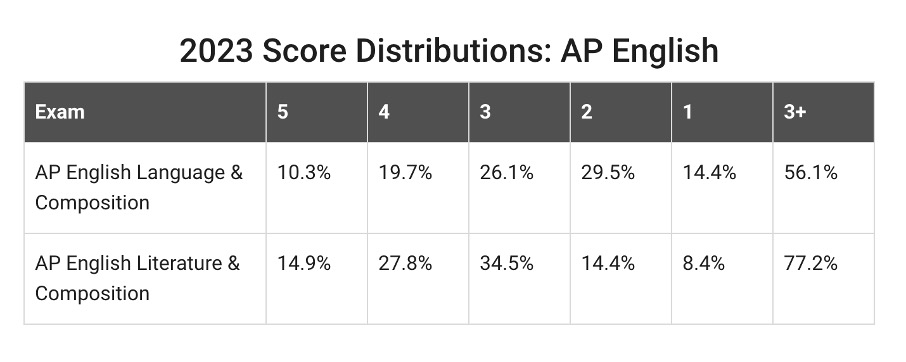
To help make sense of these two exams, we’ve enlisted the expertise of our seasoned English tutor, Heather, to answer your frequently asked questions about these English courses, the associated exams, and how to navigate AP preparation. The AP English exams are scored on a scale from 1-5. A passing rate is considered a score of 3 or above, but top colleges are generally looking for a 4 or 5. Each test is curved so scores vary from year to year. In 2023, the AP English Language and Composition exam had an overall pass rate of 56.1%, with only 10.3% of those scores being a perfect 5. By comparison, the AP English Literature and Composition exam had an overall pass rate of 77.2%, with 14.9% of those scores being a perfect 5.
AP ENGLISH ROADMAP
What are the key differences between the AP English Language and AP English Literature exams, and how should students tailor their preparation strategies accordingly?
The key distinction between the AP English Language and AP English Literature exams is that the former is on nonfiction and the latter on prose fiction, drama, and poetry. Both exams are structured similarly, with a series of passages and multiple-choice questions for Section I and a series of three essays for Section II, but the multiple-choice section of the AP English Language exam comprises 20-22 “writing” questions in which students are tasked with reading like a writer and editing the text. Timing-wise, the exams stack up fairly evenly, with AP English Language coming in at 3 hours and 15 minutes worth of testing material and AP English Literature coming in at precisely 3 hours. Both exams require an understanding of rhetorical devices commonly used by authors.
Generally, students who struggle with fiction but excel at argumentative or otherwise nonfiction reading and writing tend to perform better on the AP English Language exam, while those who excel in fiction, drama, and poetry gravitate to the AP English Literature exams. Students preparing for AP English Language should devote ample time to writing evidence-driven essays in preparation for the exam’s three essay tasks — the Synthesis essay, the Rhetorical Analysis essay, and the Argumentative essay. Those preparing for AP English Literature should be voracious readers of fiction, drama, and poetry in the months or year leading up to the exam and cast a wide net in various time periods, cultures, and writing traditions.
Vocabulary plays a significant role in both AP English exams. What are some practical methods for expanding your vocabulary and incorporating sophisticated language into your writing without sounding forced or unnatural?
Reading! Being well-read is the ideal way to improve one’s vocabulary — it’s all about exposure! Realistically, though, there are always going to be unfamiliar words that show up on the exam(s) (and in life), so it’s good to have some strategies for parsing their meaning. My go-to approach to analyzing unfamiliar vocabulary is to parse any familiar roots that may jump out. Loquacious may be a scary answer choice, but if you recognize that it contains the Latin root -loq-, meaning to speak or say, and that it ends in a suffix that indicates that the word is an adjective, you can get close enough to its meaning: talkative! Memorizing Latin and Greek roots and training awareness of the components of unfamiliar vocabulary words is a more efficient strategy than memorizing lists and lists of vocab.
As for incorporating such vocabulary into your own writing, practice makes perfect. When you’re searching for a word to use, don’t just settle for the obvious catch-all term; look for the most precise articulation of the idea that you’re trying to express. For example, don’t settle for “big” when you could be using the more precise “sizeable” or “momentous.” When you come across new vocabulary, don’t just think about its definition; consider its context.

AP Exam Tutoring
Our tutors offer customized tutoring designed to fit the needs of each student.
Time management is crucial during the AP exams, especially given the tight constraints of the multiple-choice and essay sections. How can students effectively manage their time to ensure they complete each section with accuracy and precision?
I always compare time management to starting a new training program in the gym. You might be able to tackle one multiple-choice passage or one of the essay prompts in the given time allotment right off the bat, kind of like the weight you can naturally lift without any training; more likely, though, you’re going to have to build up to certain “weights.” Isolate each part of the exam (or even each question type) and practice them without timing yourself. As your accuracy improves, time yourself with double the time the exam will give you. Then, shave that down to time and a half. Finally, by at least the three weeks leading up to the exam, you want to consistently be practicing at the actual timing you’ll have on the exam. In other words, isolate and build the skills first, then incorporate timing, increasing your speed week by week until you’re at your goal.
The AP English exams often include passages from a variety of literary genres and time periods. How can students start developing a well-rounded understanding of different literary movements and styles early in high school to better tackle the exam’s diverse content?
So many students don’t even think about this, but it’s so important! Using my training metaphor, we can see how skills (whether accuracy and/or timing, vocabulary, or familiarity with eighteenth-century styles of writing) take time to master. So, give yourself the time! Ideally, each year, you should plan to read a sampling of texts that range from the sixteenth or seventeenth century through today and try to incorporate works of authors from not only America and Britain, but lots of different cultures (sometimes even in English translation). Look at past AP English Language and Literature exams to see which books, plays, poems, and other texts come up, and read them (at least parts of them)! Even if they don’t show up on your actual exam, you’ll be improving your familiarity with the texts favored by the College Board. In other words, get curious, and aim to read more than just the texts assigned to you in school.

Writing Mentorship Program
Begin your journey toward stronger, high-impact writing!
Do students need to be enrolled in the AP English Lang or AP English Lit course to do well on the exam? Or is it possible for students to self-study and do well?
Nope! I’ve had lots of students take the exams without having taken the course. As long as a student is an active reader and writer, preparing for the exams without having taken the courses (ideally with the guidance of a tutor) is totally feasible. Just remember that it will be a time commitment, so make sure you arrange your schedule accordingly to ensure you’re setting yourself up for success!
HEATHER’S TOP (TIER) TIP:
The best way to alleviate test anxiety, especially for the essays, is to practice them slowly and intentionally, building up your skills, your comfort, and your timing over a period of months.
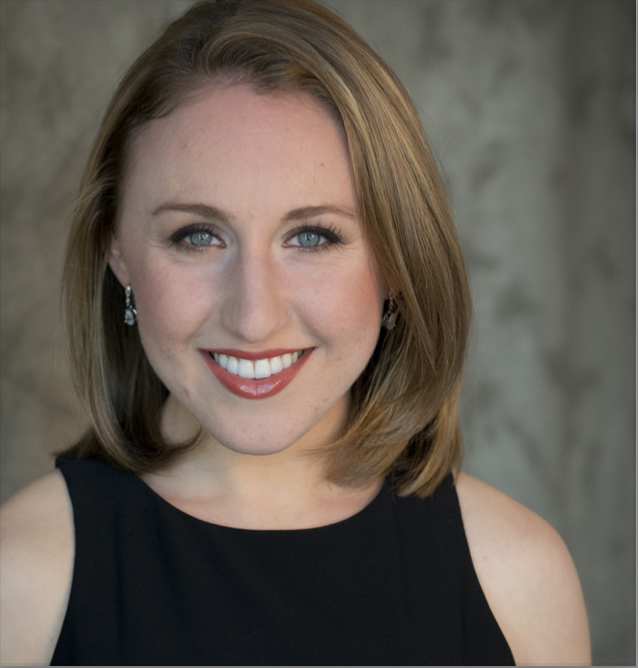
Meet Top Tier Admissions Tutor, Heather
Heather has logged over 2,000 hours coaching students in academic coursework and standardized exam preparation. A graduate of Princeton University and part-time freelance writer, Heather has worked with students ages seven through eighteen specializing in the verbal sections of the SAT and ACT, the AP Language and Composition and AP Literature and Composition exams, the ISEE and SSAT, and general humanities subjects, along with Spanish-language and occasional French-language tutoring.
One of Heather’s primary strengths as a tutor is her ability to adapt and improvise, responding adeptly to each student’s needs and molding the program to best suit their learning style.
Students love working with Heather and see her as a mentor in addition to being a tutor. Heather’s goal is for each student to always be striving for the next level.
If you enjoyed this post, follow us on Instagram @toptieradmissions for more tips and subscribe to our blog for expert insights & college admissions news!