
With so many factors to consider—academic programs, campus culture, future career prospects, etc.—it’s no wonder that college rankings often become a focal point of the college decision-making process. Earlier this month, Money Magazine released their annual list of the best colleges in America, providing a fresh perspective on institutions that excel not only in academic excellence but also in affordability and student outcomes. In the current admissions climate, we’ve noticed parents turning to these rankings more often in search of a reliable guide to make informed choices about their child’s educational future, especially as they hope to ensure that their investment in higher education pays off in the long run.
One word of caution: While college rankings offer a convenient snapshot of institutional prestige and performance, they are far from a perfect science. These rankings typically rely on a limited set of metrics, which may not fully capture the diverse experiences and opportunities each college provides. Furthermore, an overemphasis on rankings can drive colleges to prioritize superficial improvements over meaningful, student-centered changes, ultimately distorting the true purpose of higher education. While a useful resource to complement your college search, this should always be understood in the larger context of a school’s offerings and fit.

Personal Application Boot Camp®
Three days of one-on-one work with a Senior Counselor from the Application Boot Camp® team.
COLLEGE RANKINGS: METHODOLOGY
The objective of Money’s Best Colleges ranking is to provide a thorough analysis of over 700 U.S. four-year colleges, emphasizing affordability and student outcomes to guide families in their tuition investments. The ranking, conducted in collaboration with Witlytic, began with over 2,400 institutions, which was then narrowed down to 745 based on criteria like minimum enrollment, data reliability, financial health, and graduation rates.
Colleges were evaluated for this ranking in three categories: Quality of Education (30%), Affordability (40%), and Outcomes (30%), using 25 specific factors. Quality metrics include graduation rates, peer quality, and instructor access; affordability considers net price, debt, and repayment ability; outcomes focus on earnings, employment, and economic mobility. Colleges receive star ratings from 2 to 5 stars to represent performance variations without exaggerating minor score differences.
Colleges with 2 or 3 stars have lower alumni salaries and graduation rates as well as higher price tags versus 5-star colleges that have a higher ROI. It’s important to note that Money’s college ratings have limitations, including reliance on incomplete earnings and employment data, lack of measures for student learning, potential biases from test-optional admissions policies, lack of geographical cost of living adjustments, etc.
MONEY MAGAZINE’S 2024-2025 5-STAR COLLEGES
Quite a few of the “New Ivies,” “Little Ivies,” “Public Ivies,” “Southern Ivies,” and even historic Ivy League schools made the cut:
- Amherst College
- Babson College
- Bentley University
- Berea College
- Boston College
- Bowdoin College
- Brown University
- CUNY Bernard M. Baruch College
- California Institute of Technology
- California Polytechnic State University, San Luis Obispo
- California State Polytechnic University, Pomona
- California State University, Long Beach
- California State University, Stanislaus
- Carnegie Mellon University
- Claremont McKenna College
- Columbia University in the City of New York
- Cornell University
- Dartmouth College
- Davidson College
- Duke University
- Georgetown University
- Georgia Institute of Technology
- Harvard University
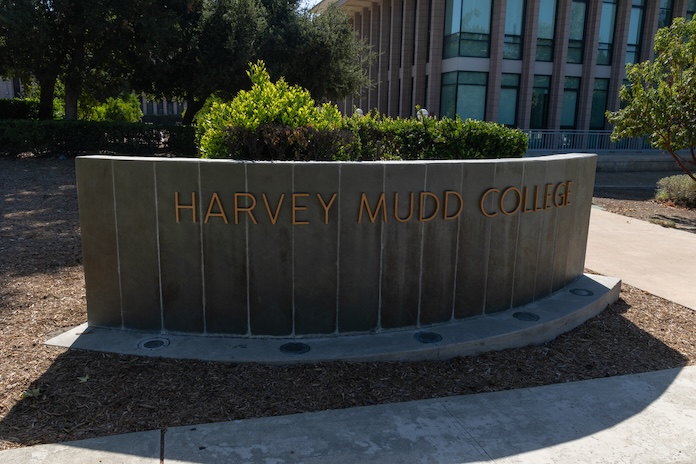
- Harvey Mudd College
- Johns Hopkins University
- Massachusetts Institute of Technology
- Massachusetts Maritime Academy
- New Jersey Institute of Technology
- Northwestern University
- Pomona College
- Princeton University
- Rice University
- Stanford University
- Swarthmore College
- The Cooper Union for the Advancement of Science and Art
- University of California, Berkeley
- University of California, Davis
- University of California, Irvine
- University of California, Los Angeles
- University of California, Riverside
- University of California, San Diego
- University of Chicago
- University of Florida
- University of Illinois Urbana-Champaign
- University of Michigan
- University of Notre Dame
- University of Pennsylvania
- Virginia Military Institute
- Washington University in St Louis
- Washington and Lee University
- Wellesley College
- Wesleyan University
- Williams College
- Yale University

College Private Counseling
Develop an organized and effective application strategy that leverages your academic and extracurricular experience to stand out.
SURPRISE, SURPRISE
While many of these schools are Ivy League institutions (e.g., Harvard, Yale, Princeton), highly prestigious universities (e.g., Stanford, MIT, Caltech), or top liberal arts colleges (e.g., Amherst, Williams, Swarthmore), there are a few surprises on this list such as the University of Florida (also named one of the “New Ivies” this spring), Harvey Mudd College (a STEM-focused school in the Claremont Consortium) and Bentley University (a small undergraduate business school in Massachusetts).
As tuition costs continue to rise, parents are more focused on ROI and figuring out how much is too much for tuition and in some cases, whether college is even worth the cost. For a further deep dive check out:
If you enjoyed this post, follow us on Instagram @toptieradmissions for more tips and subscribe to our blog for expert insights & college admissions news!