
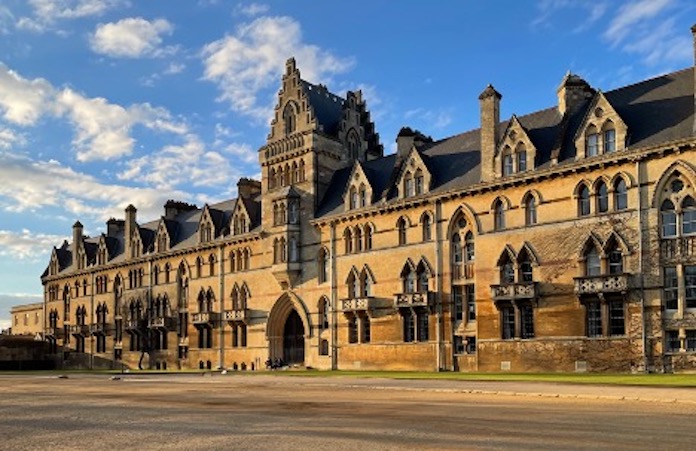
Why Study in the United Kingdom?
For high school students seeking an international education, UK schools provide many unique and exciting opportunities. The UK university system notably offers students the chance to focus on their academic specialization from the moment they arrive on campus. Schools in the UK are known for targeted coursework on a particular subject and lecture-based classes with few extra assignments, group projects, or “busy work.” Instead, the majority of your grade is based on final exams and/or a research paper. Students succeed in this system if they are self-motivated, confident with time management, and enjoy independent work. Prospective students must also have a firm idea of their academic specialty before the undergraduate application process begins since they will be asked to apply to a specific course vs. general admission. Along these lines, academic performance is the main component of your application, and much less weight is given to “extra” factors such as extracurricular activities, civic engagement, performing arts, or athletics. Finally, because UK schools don’t require distributive requirements like most US schools, a standard bachelor’s degree takes only three years to complete. US students who want to stay on campus for a 4th year can earn a Master’s Degree in their area of study, something that may make them more marketable as job candidates after graduation.
UCAS vs. The Common Application
There are 23 colleges in the UK that accept the Common App, a single online college application form used by over 900 colleges and universities (and the vast majority of US schools). These include Durham University, Newcastle University, University of Aberdeen, University of Glasgow, and the University of St. Andrews.
Most UK schools, however, have partnered with UCAS (the Universities and Colleges Admissions Service) to provide a streamlined application process. You can see which schools use UCAS here. If you choose to apply to one of these member schools, you will need to follow the steps below:
Step 1: Register with UCAS. Unlike the Common App, where you are asked to create university-specific applications and supplements, UCAS is a single system with only one essay required.
Step 2: Select your degree and check the university entry requirements. UK Bachelor’s degrees are very specialized, so it is especially important to choose the right course. This is another key difference from the US-system, where you are not asked to declare a major before you enroll. To be a competitive applicant at UK universities, you need to demonstrate depth in a particular area of study.
Step 3: Write your personal statement. The UCAS personal statement is limited to 4,000 characters (around 500 words), versus the Common App main essay, which is 650 words max. This statement should also demonstrate a clear understanding of the subject you have applied to study and your relevant skills/experiences related to this academic focus.
Step 4: Select five universities. There are approximately 350 universities that use the UCAS online application.
Note: There are a few caveats to the UCAS system. For example, you can’t apply to both Oxford AND Cambridge in the same cycle.

Common App 911/UC App 911
Step-by-step strategic support.
Top UK Universities
University of Oxford
Where to Apply: UCAS
Application Deadline: October 15
About Oxford: Oxford is the oldest university in the English-speaking world, with evidence of teaching as early as 1096. Oxford has produced 28 British Prime Ministers and 55 Nobel Prize winners. One of the most prestigious international academic institutions, Oxford is composed of more than 30 different colleges, which are self-governing institutions and academic communities within the larger university. All enrolled students are members of a particular college (versus a main campus) and most teaching is organized around weekly tutorials. Each college also has its own dining hall, common room, library, and other amenities. You can decide whether to express a college preference or make an open application on your UCAS form. Due to its long history, Oxford may seem like another universe with its unusual traditions and dress codes. During the Matriculation ceremony at the beginning of the first term, students wear their academic dress (a short black gown and either a suit and tie or shirt with a black ribbon). This ceremony is conducted entirely in Latin. Every week, students also have the opportunity to wear their formal Oxford attire to attend a three-course meal at their college, called “Formal Hall.” If you are interested in applying to Oxford, you must first select a course and make sure that you have met or are on target to meet the admission requirements. Each year, Oxford receives over 20,000 applications for roughly 3,250 places. For more information, read Oxford’s guide for applicants to learn about each stage of the admissions process. Shortlisted candidates receive their admissions decisions in mid-January.
University of Cambridge
Where to Apply: UCAS
Application Deadline: October 15
About Cambridge: The University of Cambridge was founded in 1209 and granted a royal charter by Henry III in 1231. As is common with UK universities, interested applicants begin the admissions process by choosing a course of interest and checking the entrance requirements. As part of the UCAS application, applicants can apply directly to one of Cambridge’s 31 colleges or make an open application. The Cambridge application process includes a written admission assessment, either pre-interview or during the interview. Some applicants will also be asked to submit examples of their written work. To learn more about what to expect from this interview, and how to prepare, see this guide to the Cambridge interviews. Final admissions decisions are made before the end of January. Admitted students enjoy Cambridge’s many quirky traditions once they arrive on campus. For instance, at the end of exams, students celebrate with cardboard box boat races down the River Cam. And, at the end of the academic year, colleges host formal balls to celebrate—don’t forget to pack your evening gown or tux!
University of Edinburgh
Where to Apply: UCAS
Application Deadline: January 15
About Edinburgh: The University of Edinburgh, founded in 1582, is one of Scotland’s ancient universities and the second most popular university in the United Kingdom, based on volume of applications. The university’s five main campuses include architecturally significant buildings in Old Town, Edinburgh. Notable alumni include three signatories of the U.S. Declaration of Independence and nine heads of state and government, including three U.K. Prime Ministers.
Students must apply via UCAS for a full-time undergraduate degree program. To learn more about the courses available at the University of Edinburgh, look here.
The undergraduate entry requirements vary by country, but for applicants from the United States of America, the University of Edinburgh requires three standardized test scores (made a bit more flexible due to the pandemic).
Examples of the minimum entry requirements regarding standardized tests are:
- ACT score of 27 plus two AP scores at 4+
- SAT score of 1290+ (650+ in Evidence based reading and Writing and 620+ in Math) plus two AP scores at 4+
- 3 AP scores at 4+
University of St Andrews
Where to Apply: Common App, UCAS, or Direct Application
Application Deadline: Completed applications are considered on a rolling basis. Typically, you can expect to receive an answer within four weeks of submitting a complete application.
About St Andrews: St Andrews was founded in 1413 and, along with the universities of Glasgow, Edinburgh, and Aberdeen, was part of the 18th-century Scottish Enlightenment. The university is located in a quaint town on the east coast of Scotland, known also for its celebrated golf course, and occupies historic and modern buildings throughout the town and overlooking the North Sea. Notable contemporary alumni include the Duke and Duchess of Cambridge (William and Kate), who met in an art history class. In the past 10 years, St Andrews has developed a reputation for its international student body and particularly for its popularity amongst Americans (it has the highest number of American students across all British universities). St. Andrews has also partnered with two US universities through the Robert T. Jones Scholarship, a competitive scholarship exchange with Emory University, and a joint degree program with the College of William & Mary in Virginia. Since St Andrews accepts the Common App, the application process is quite straightforward for US applicants, and most students who apply to the University are not required to attend an interview. International students should refer to the standard entry requirements listed on the course pages, but St Andrews accepts a broad range of qualifications from around the world (see more regarding entry requirements for US applicants here). In addition to a rigorous curriculum, grades of A or B in honors level courses, and AP classes, St Andrews looks for AP scores of 5 on tests that complement your intended course of study (for example, a 5 on AP Calculus BC for entry to study mathematics, physics, or computer science), an ACT score of 28+ or an SAT score of 1320+.
University of Glasgow
Where to Apply: UCAS or Common App (for international students applying to Arts, Engineering, Law, Nursing, Science, and Social Sciences).
Application Deadline: October 15, if including Dentistry, Medicine, Veterinary Medicine or also applying to Oxford or Cambridge; January 29, all other UK applicants (unless otherwise stated on the UCAS website); June 30, international students.
About Glasgow: The University of Glasgow, founded in 1451, is the 4th oldest university in the English-speaking world. Located in the city’s West End, it is ranked in the top 10 UK universities and the top 100 universities worldwide. Notable alumni include Adam Smith and Lord Kelvin in addition to seven Novel Prize winners and a Prime Minister. Enrolled students come from more than 140 countries around the world, including 1,000 American students who arrive every year. Once on campus, students may join some of the over 300 clubs and societies, the Glasgow University Sports Association, or the Queen Margaret Union (which hosts music, club nights and local bands). Although the undergraduate entry requirements have become more flexible due to COVID, Glasgow considers applicants with a minimum overall GPA of 3.5 and advanced coursework in required subjects. For students who do submit scores, they ask for either an SAT above 1280 or an ACT above 27 and 2 AP examinations with scores of 4+. If students do not take the SAT/ACT, they should submit 3 AP examinations with scores of 4+. An interview is part of the admissions process for only some courses of study: Community Development, Dentistry, History of Art & Art-world Practice, Medicine, Music, Nursing, Teaching, and Veterinary Medicine & Surgery. Decisions are usually announced before the end of March.