
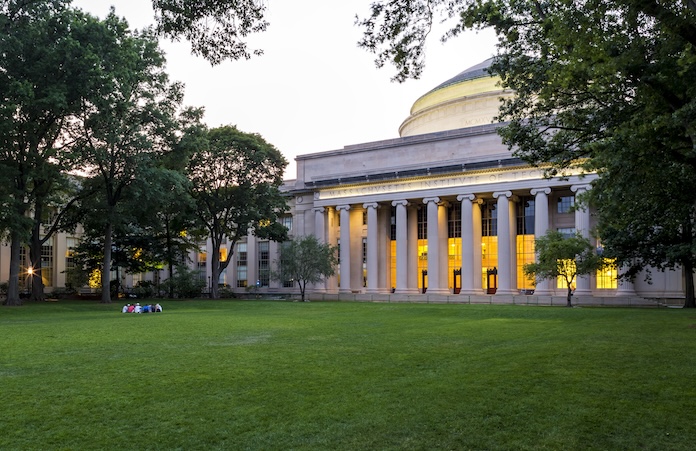
With an acceptance rate of just 4.8%, the Massachusetts Institute of Technology (MIT)—the Cambridge-based STEM and Engineering powerhouse—has a lower acceptance rate than most Ivies. For the Class of 2027, only 1,291 students were admitted from among 26,914 applicants. This level of selectivity is even more striking considering that applying to MIT requires a special level of effort, focus, and dedication.
As one of the last holdouts that forgoes the Common App (alongside Georgetown), MIT has its own application portal with a tailored set of prompts and application components, ensuring that students apply intentionally. And as the first selective school to revert to requiring standardized testing after the pandemic, MIT has never hesitated to do things in its own way – with purpose. All of this means that MIT’s low acceptance rate already reflects an intense filter on students choosing to apply, which in turn means that only the most exceptional application dossiers will be successful.

Common App 911/UC App 911
Step-by-step strategic support.
MIT’S FOCUSED PRIORITIES
Examining the elements of the MIT application with a focus on how they differ from the Common App highlights this Ivy+ school’s focused priorities:
Depth: Instead of the 10 activities on the Common App or the University of California’s list of 20 Activities and Honors, MIT allows applicants to list only four extracurricular activities. This signals MIT’s emphasis on quality over quantity. MIT is disinterested in resume fillers or club memberships – they only want to know about your most significant endeavors where you have devoted substantial time and dedication.
Industriousness: True to their mascot Tim the Beaver, MIT values hard work, with a separate section for employment. Here MIT asks “Please list all employment, including summer jobs, part-time or full-time positions, and/or internships. Include your job title, employer name, dates of employment, and approximate number of hours worked per week.”
There is also a separate section for summer activities where they ask for a list of “any summer activities (reading, relaxing, camp, travel, summer school, volunteer work, etc.)” in reverse chronological order. Making productive use of summer breaks through either jobs and other meaningful summer activities is critical.
Excellence: Like the Common App, the MIT app has a section for five awards (called “Scholastic Distinctions”), but it also has a separate section for five Non-Scholastic Distinctions, thereby recognizing the importance of demonstrable excellence both inside and outside of the classroom. This is another area where the credentials listed on the MIT application require intentional long-term planning to ensure eligibility for meaningful awards.
Reflection: MIT’s application for the 2023-24 cycle asked applicants to answer five short essay questions in 100-200 words each. These were:
1. What field of study appeals to you the most right now? (Note: Applicants select from a drop-down list.) Tell us more about why this field of study at MIT appeals to you.
This is MIT’s “Why us?” essay. The phrasing “right now” emphasizes the evolving nature of many MIT students’ interests, but regardless of whether it changes in the future, it is important to showcase a firm academic area of interest and to know and demonstrate how it corresponds to what MIT offers.
2. We know you lead a busy life, full of activities, many of which are required of you. Tell us about something you do simply for the pleasure of it.
MIT doesn’t want another essay about debate team or science bowl, as the question asks students to dig deeper to explain how they choose to spend their unstructured time.
3. How has the world you come from—including your opportunities, experiences, and challenges—shaped your dreams and aspirations?
This represents a frequent type of essay prompt about diversity and identity.
4. MIT brings people with diverse backgrounds together to collaborate, from tackling the world’s biggest challenges to lending a helping hand. Describe one way you have collaborated with others to learn from them, with them, or contribute to your community together.
This question focuses on collaboration, which is one of the school’s guiding characteristics.
5. How did you manage a situation or challenge that you didn’t expect? What did you learn from it?
This question emphasizes the importance MIT places on creative thinking and problem solving – two characteristics that define MIT students.
Research. Since scientific research is at the core of MIT curriculum, it is no surprise that this is a highly valued attribute among applicants. MIT’s application reinforces this importance in its thorough “Research Questionnaire.” Students who indicate that they have research experience are asked to expand on it in a very detailed list of follow-up questions. While other schools might be impressed with a research abstract, MIT wants to see a student’s full understanding of their research. This in-depth research supplement asks no less than 14 (!) detailed questions:
- Which MIT department might be the best home for your research? (Dropdown)
- Provide a brief description of your research. Feel free to use technical jargon when necessary—but keep in mind that your audience will include educated readers who may not be experts in your specific field.
- How did you become involved in your research? Research is a collaborative process. Please help us learn more about your research experience by checking all that apply (choices offered).
- Please tell us the nature of your relationship with the person who helped you find your research project and how they helped you.
- Which of the following options related to payment apply to your research experience? Select all that apply. (We are fine with any of the options below—we just want full disclosure.)
- Where did you conduct your research? Describe the research location (university, institution, company, etc.) including the name of the lab or department, if applicable.
- How many hours per week and for how long did you work on the research? List hours per week and dates worked; e.g., 7 hours/week from June 1–August 15, 2023.
- Did you work with a research mentor?
- How did you first meet your research mentor?
- Describe the role your mentor played in your research.
- Summarize your contributions to this research project. What were the specific tasks that you were involved in? Feel free to use technical jargon when necessary—but keep in mind that your audience will include educated readers who may not be experts in your specific field.
- What did you learn about the research process and your research interests?
- Has this work been submitted to any high school research competitions?
- Has this work been submitted, presented, and/or published in other academic venues?
These questions show that MIT is not interested in research experience that was simply done to “click the box.” Instead, their questions probe deeply to understand how the research was organized and the student’s exact role and level of contribution and sophistication.
Outside Perspective. Like most Ivy+ schools, MIT asks for two high school teacher recommendations, and a secondary school report that includes a counselor recommendation. This is standard except that MIT specifies that “One recommendation should be from a math or science teacher, and one should be from a humanities, social science, or language teacher” and further explains that they are looking for letters from teachers who “know an applicant well as both a student and a person.”
MIT makes a special effort to interview applicants in person “whenever possible” through their worldwide network of 3,500 MIT alumni interviewers. MIT alumni interviews are evaluative, typically in person, and last a full hour. They matter. Want help preparing for your interview?
Additional Information. MIT’s open-ended text box “where you can tell us anything else you think we really ought to know” is shorter at 350 words compared to the 650 words allowed on the Common App. In an arena where the applicant pool is uniquely strong and the admit rate is very low, applicants should be sure to use this additional space meaningfully.

Personal Application Boot Camp®
Three days of one-on-one work with a Senior Counselor from the Application Boot Camp® team.
CRAFT A COMPELLING MIT APPLICATION
MIT makes applicants work hard to complete their materials for admission to one of the most selective and impactful institutions in the country. However, MIT has a streamlined timeline with just two, non-binding admissions rounds: Early Action due November 1st and Regular Action due January 4th. Students hoping for good news on Pi Day, March 14th (the mathematically significant day when the Institute typically releases admission decisions) should complete every component of their MIT application with special care and attention.
Crafting a compelling MIT application package requires substantial dedication and focus at a time when other applications with differing prompts likely also demand your attention. Applicants to MIT should therefore both plan ahead and be sure that they fully understand the Institute’s priorities as reflected in the many application components that are unique to MIT.
If you enjoyed this post, follow us on Instagram @toptieradmissions for more tips and subscribe to our blog for expert insights & college admissions news!

After attending Castilleja School in Palo Alto, California, Heidi graduated cum laude with an Honors thesis from Dartmouth College as a double major in Classical Archaeology and Comparative Literature. At the University of Pennsylvania, Heidi was a Williams Fellow in the graduate program of Art and Archaeology of the Mediterranean World. She has conducted archaeological field work in Sardinia, Cyprus, Greece, and Turkey.