
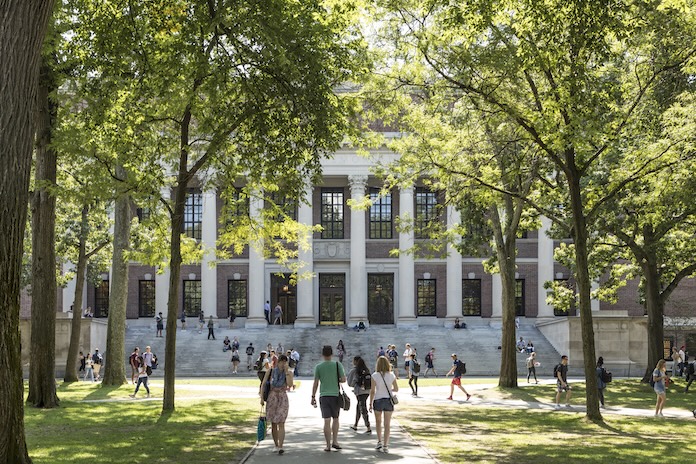
In an era of high-definition virtual tours, booking a flight just to walk across a campus can feel like an expensive luxury–but you can’t actually ‘feel’ a campus culture through a laptop screen. While I completely understand this sentiment, it’s also one where I feel strongly that YES, it is worth making an in-person visit! College students live on or near campus for four years of their lives, so you want to make sure you like the “vibe” of the university, in addition to its academic and co-curricular offerings.
Why You Should Swap Virtual Tours for In-Person College Visits
In February, I visited six campuses on the east coast as a chaperone with College Bound Campus Tours, so I’m excited to share some recent firsthand experiences alongside my tips, which are informed by over a decade of visiting colleges across the country.
Each year, Kristin Sartelle and her team at College Bound take around 40 high school sophomores and juniors on tours primarily focusing on colleges in the South. Kristin explains her intent: “Our goal is to create experiences that go beyond glossy brochures and digital screens. We want prospective students to truly connect with each campus by engaging directly with the people who bring it to life—students, staff, and faculty.”
In alignment with this goal, my recommendations focus on key elements that can make an in-person visit worthwhile. Overall, it’s all about adding the human touch. College websites and virtual sessions provide plenty of helpful facts, but they can’t give you the campus vibe or culture.
Application Boot Camp®
Need strategic guidance from start to finish?
College Visit Checklist: 6 Ways to Make the Most of Every Campus Tour
1. Experience the Setting: From Urban Hubs to Quiet College Towns
Our tour began at Georgetown University and then traveled to Washington & Lee University, the University of Virginia, Duke University, the University of North Carolina-Chapel Hill, and Wake Forest University over the course of four days. By setting foot on each campus, we were able to discern differences between urban, rural, and college-town settings. Georgetown is located in a lively neighborhood filled with shops, restaurants, and busy streets, with federal buildings visible in the distance. Washington and Lee, in contrast, had a much quieter feel when we arrived in a historic small town surrounded by the Blue Ridge Mountains. Chapel Hill and Charlottesville are consistently ranked among the top college towns in America, and Wake Forest was unique in showing us a gated campus setting, which created a sense of comfort and strong community.
2. The “Taste Test”: Why You Must Eat in the Dining Halls
After working with high school students for almost two decades, I am well aware of how important food is to this age group. If you visit campus, I highly recommend you check out dining halls, coffee shops, and restaurants on and off campus where students frequently spend their time. Dining halls often allow visitors to purchase meals, which will give you an authentic on-campus experience, and sometimes the food can be quite good. At UVA, students devoured Rookie’s that they found at a coffee shop inside Clark Hall. We also ate lunch in Duke’s award-winning dining facilities, where the tuna poké bowl I had at the Brodhead Center was easily the best meal of my trip. (A pimento cheese appetizer at The Carolina Inn came in as a close second.) Dining halls and popular student eateries are also often great places to observe students and even strike up conversations with any who seem friendly.
3. Beyond the Script: Hearing Real-Time Student Stories
In-person visits often include informal down time when students or admissions officers share details you won’t find online. As an example, my tour guide at Wake Forest told us she had a job as a personal trainer in Wake’s Student Rec Center. At Washington and Lee, one student left our 6:30pm dinner in town to play in an intramural basketball game, and another ran off to a rehearsal with her band. These anecdotes helped us understand the diversity of student experiences and are often hard to find in more public-facing materials online. On College Bound Tours, current students are invited to meet with our group throughout the tour, and the students attending mentioned how helpful these candid conversations were for their experience.
College Private Counseling
Unlock your full potential.
4. Witnessing Campus Culture and Traditions in Action
Our group visited Duke and UNC on a Saturday in February, deep in the heart of ACC basketball season. At Duke, we made a stop at Krzyzewskiville, where we witnessed students “tenting,” sometimes for as long as a month, to secure access to designated high-profile men’s basketball games, such as games against archrival UNC-Chapel Hill. Seeing this tradition happening helped the campus come to life and helped students understand what makes Duke distinct from other universities. Later in the day, we headed to Chapel Hill and caught the UNC vs. Pitt basketball game inside the iconic Dean Dome, which was packed with Tarheel fans on a Saturday, giving another example of first-hand experiences only possible with an in-person visit. At Wake Forest, we experienced a weather event because it poured during our tour! It worked out nicely because our tour guides held a longer conversation with us inside the beautiful Wait Chapel, and we realized how walkable and easy-to-navigate the campus was, even in stormy weather.
5. Scoping Out Housing and Dorm Life
Because most colleges require students to live on campus for at least the first (and sometimes all four) years, seeing student housing and even going inside dorm rooms, if possible, is a worthwhile experience. Some smaller colleges often include a tour of a model dorm room for all visitors, and larger universities often offer a dorm tour as an add-on to the regular tour. At UVA, we were able to go inside Greek houses (thanks to former College Bound students), and UVA also features a model dorm on its iconic front lawn, where a select group of 54 seniors live as “lawnies” in historic single dorm rooms with fireplaces.
6. Strategic Benefits: Proving Demonstrated Interest
In addition to the numerous intangible details a tour can fill in, there’s also a strategic advantage when investing in an in-person visit. Students who attend information sessions and tours have an official record with the university on file and show demonstrated interest by making the effort to travel to campus. Details and anecdotes from visits also help personalize student essays on applications.
In a process that’s full of hard data and facts, it’s nice to be reminded of the often-intangible elements that make college life so special. Whether you want to taste dining hall cuisine, chat with current students, visit a class, or step inside a dorm, taking the time to walk through campuses of your top-choice colleges is usually worth the time and investment.
If you need help planning visits over spring break or this summer, speaking with a private counselor can give direction about which locations and campuses to prioritize. College Bound Tours also posts its schedule for the 2026-2027 school year in April, so sign up for their email newsletter to stay informed! To help with future campus visits, I’ve left a quick College Visit Checklist for your reference below.
Your Essential College Visit Checklist
Before you go:
- Register for an official tour and info session to document demonstrated interest
- Research the school’s signature programs, housing, and traditions
- Have your student prepare a list of questions they want answered
While you’re there:
- Eat in the dining hall
- Talk to current students — not just tour guides
- Walk off the official route and explore independently
- Visit a dorm, even if just the lobby
- Note the setting: urban, rural, college town, or gated campus
After the visit:
- Have your student write down first impressions while they’re still fresh
- Capture specific details and stories for future application essays
- Compare the overall “feel” against other schools visited
Frequently Asked Questions About College Visits
Should you visit colleges before applying? Yes — whenever possible. Visiting before you apply helps your student write stronger, more specific essays and confirms whether the school is truly a fit before investing time in the application. It also creates a record of demonstrated interest, which some schools track and factor into admissions decisions.
What should you look for on a college tour? Beyond the standard highlights, pay attention to the campus setting, student energy, dining options, and housing quality. The unofficial moments — a student rushing off to rehearsal, a packed dining hall on a weekday — often tell you more than the scripted tour does.
Is it worth visiting colleges in person? For most families, yes. Virtual tours and information sessions provide helpful facts, but they can’t replicate the feeling of walking a campus, eating the food, or having a candid conversation with a current student. Four years is a long time — it’s worth knowing your student will be happy in the environment, not just the rankings.
Want to stay in the loop? Follow us on Instagram @toptieradmissions and subscribe to our blog for expert advice and admissions insights.
Know someone else navigating the college process? Pass it along—they’ll thank you later!

- What Makes a College Essay Stand Out in 2026-2027 - August 3, 2026
- Do Boarding Schools Give Students an Edge in College Admissions? - June 24, 2026
- College Visit Checklist: 6 Ways to Make the Most of Every Campus Tour - April 2, 2026