
Northwestern University Acceptance Rate
Everything you need to know about Northwestern University Admissions.
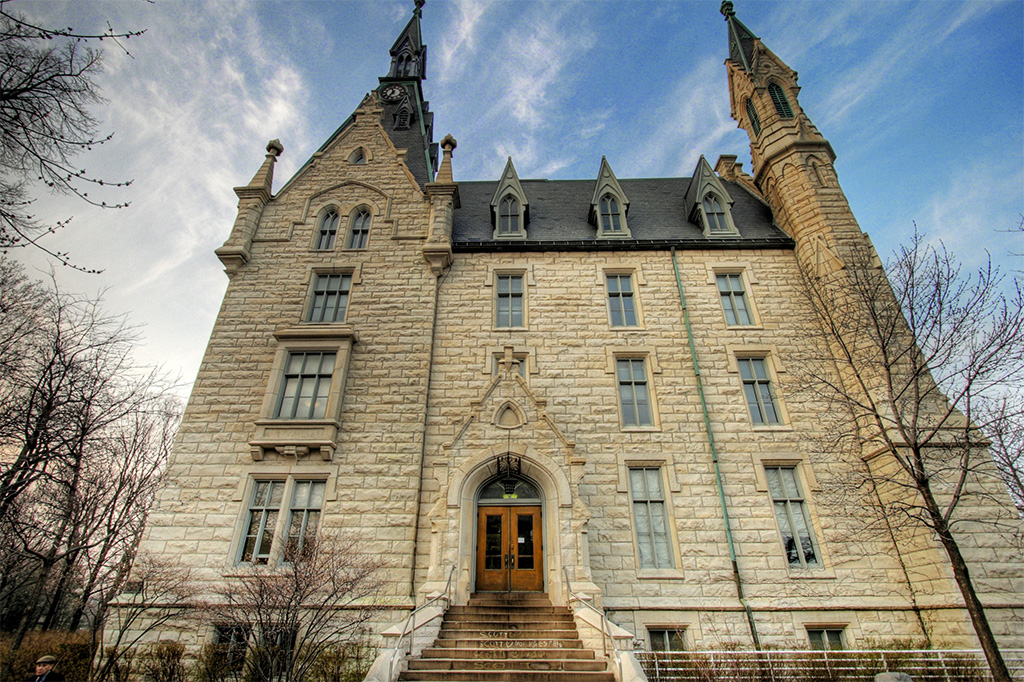
Get Into Northwestern University
Northwestern University currently ranks at #7 (tied with Duke, Johns Hopkins and UPenn) on the most recent U.S. News and World Report’s list of National Universities, and at #19 on its list of Best Value Schools. Founded in 1851, Northwestern currently enrolls 8,527 undergraduate students, most of whom study on its main campus in Evanston, IL. Northwestern also has campuses in nearby Chicago—located only twelve miles away from Evanston—and, as of 2008, in Doha, Qatar.
Students regularly commute between Evanston and Chicago, traveling either by public transit or on the free intercampus shuttle. In addition to classrooms and labs, Evanston offers beaches, coffee shops, scenic running trails, and a vibrant restaurant scene. In Chicago, students can find a more urban environment, as well as important cultural centers like the Museum of Contemporary Art and the John Hancock Center.
Nearly 70 percent of the undergraduate population at Northwestern lives on campus. These students have the option of living in traditional residence halls, in residential communities (which offer more student-driven programming and live-in faculty), or in one of eleven residential colleges. Residential colleges—which range in size from 40 to nearly 300 students—are generally themed around particular issues, including business, international studies, public affairs, and community engagement. All offer students a variety of academic and social programming, including the opportunity to dine with faculty members, attend regular outings and presentations (known as “firesides”), and, in some cases, take small seminars for credit.
Northwestern offers more than 500 extracurricular groups for students to join, with focuses ranging from community involvement to theatrical performance to political activism. The school also competes in NCAA Division I sports, and it is the only private university in the Big Ten conference. Academically, Northwestern works on a quarter system, which gives students the opportunity to take more classes than a traditional semester system; students typically take four classes each quarter.

Top Tier’s students had GREAT results in both the early and regular rounds. Check out our successes!

Northwestern University is comprised of twelve different schools, including:
- Weinberg College of Arts and Sciences
- School of Communication
- School of Education and Social Policy
- McCormick School of Engineering and Applied Sciences
- Medill School of Journalism, Media, Integrated Marketing Communications
- Bienen School of Music
- Graduate School
- Pritzker School of Law
- Kellogg School of Management
- Feinberg School of Medicine
- School of Professional Studies
- Northwestern University in Qatar
The first six of these are undergraduate schools, offering students bachelor’s degrees in a variety of different fields. Students can also earn undergraduate degrees—and study abroad for the fall semester—at Northwestern’s Qatar campus. In addition, the Kellogg School of Management offers undergraduate certifications in financial economics and managerial analytics. In total, Northwestern offers undergraduates more than 200 formal academic concentrations, as well as the opportunity to develop and complete their own programs of study.
Northwestern also offers a Dual Bachelor’s Degree Program, allowing students to earn degrees from two schools in five years. Interested students can earn combined degrees in liberal arts and engineering, liberal arts and music, communication and engineering, communication and music, education and music, engineering and music, or journalism and music. To be admitted to a Dual Bachelor’s Degree Program, students must apply to both schools. Since each application is considered separately, it is possible to be admitted to only one or both schools.
In addition, Northwestern offers several special admissions programs. Students interested in math and natural sciences can apply to the Weinberg College’s Integrated Science Program (ISP), which offers an intensive, accelerated curriculum and the opportunity to complete a bachelor’s degree in three years. High school seniors interested in medicine can also apply to the Honors Program in Medical Education (HPME), a non-binding, seven-year BA/MD program. This program allows students to earn a bachelor’s degree through an individualized course of study at the Weinberg College, McCormick School of Engineering and Applied Sciences, or School of Communication, and then—provided they maintain a minimum GPA—gives them the option to matriculate at the Feinberg School of Medicine. (The MCAT is not required for matriculation into Feinberg.)
Northwestern offers all students the opportunity to do research, study abroad, or pursue internships. In fact, almost 75% of Northwestern’s undergraduates engage in these opportunities. The school’s Office of Undergraduate Research makes it easy to participate in research by administering grant programs that award over one million dollars annually. The university’s Undergraduate Research Grant offers support for independent projects undertaken during the summer or the academic year, while the Undergraduate Research Assistance Program allows students to work as research assistants on faculty projects. Northwestern’s many interdisciplinary research centers also offer lots of resources for undergraduate research, including special programs, research grants, and funding for independent scholarly projects.
For graduate students, Northwestern offers ten graduate and professional programs, including those at the Kellogg School of Management, the School of Education and Social Policy, the School of Law, the Feinberg School of Medicine, the McCormick School of Engineering and Applied Sciences. An accelerated JD program allows a select group of students to complete the JD in two calendar years, while the Pritzker School and the Kellogg School offer a joint degree program allowing students to earn both JD and MBA degrees in three years.
Applying to Northwestern University
Undergraduate applicants to Northwestern can apply Early Decision or Regular Decision. Early Decision applications, generally due November 1, are binding, meaning that any accepted students must attend Northwestern. Early Decision applicants are allowed to apply Early Action and Regular Decision to other schools, but they must withdraw these applications if they are accepted by Northwestern.
Northwestern readily admits that Early Decision applicants have an advantage over students in the regular round. In the school’s own words, “Applicants who choose Early Decision send a strong positive message to Northwestern. Given early applicants’ high level of interest and the high concentration of academic and personal strengths represented across the early applicant pool, our Early Decision acceptance rate is typically higher than that of Regular Decision.” In fact, Northwestern usually fills up one half of the entering class during the early round.
Students can apply using either the Common Application or the Coalition Application. For the Class of 2029 scores from either the SAT or ACT are optional. Applicants to the ISP and HPME programs have more precise requirements. Based on our experience working with students at Top Tier, however, we know that “recommended” tests are often actually required for admission. Northwestern also offers applicants the opportunity to take part in an alumni interview.
Northwestern University Admissions Wrap Up
Class of 2029
Northwestern received over 53,000 applications to the Class of 2029. The accepted 3,710 for a rate of 7 percent. In the early round they accepted 20 percent of the over 6,000 applications.
Top Tier Admissions Can Help You Get Into Northwestern University
Ready to Apply to Northwestern? Try one of these Top Tier options!

Application Boot Camp®
Need strategic guidance from start to finish? Try Application Boot Camp®.

Personal Application Boot Camp®
Three days of one-on-one work with a Senior Counselor from the Application Boot Camp® team.

College Private Counseling
Develop an organized and effective application strategy that leverages your academic and extracurricular experience to stand out.